Category Archives: Tutorial

Tale of Two T-Shirts: A Tee Refashion

I took two t-shirts I wasn’t wearing very often and made one shirt I like a lot!

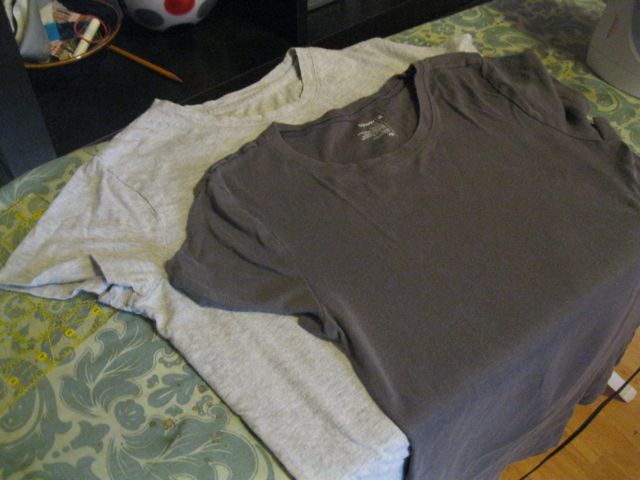
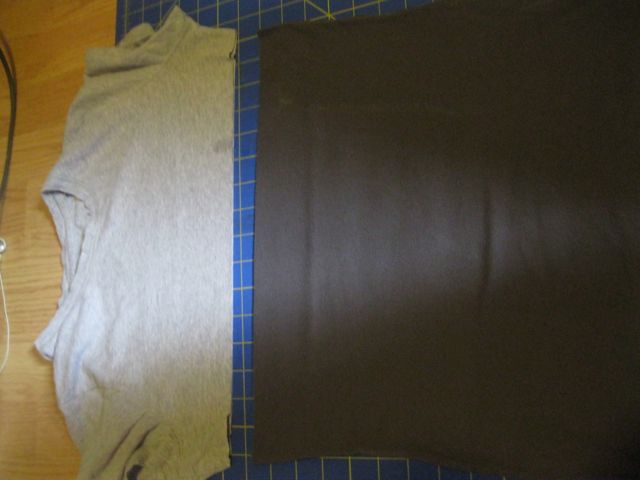
I cut about two inches down from the armpit on my top light-grey shirt, and then one and one-half inches down from the armpit on my dark grey t-shirt.

Two shirts, both alike in cheapness.

From forth the fatal loins of these two shirts, we’ll make a gooder shirt and stuff

I met them at the seams – these shirts were almost exactly the same size, so, thanks to the stretch of jersey, I didn’t have to make any adjustments to width.   I put a pin at both side seams first and then worked the middles together.

shirts met at the side seams – right sides together, with the inside-out light grey shirt nested inside the darker grey.

I sewed a shallow zig-zag stitch with a 3/8inch seam allowance all the way around, using a walking foot and a stretch needle. Then I went around again, doing a wider zig zag stitch on the seam allowance.  I’m guessing a serger would come in handy here  : )

Definitely something I’ll wear more often than either of the two plain tees!

2 Comments

Filed under Clothes, Tutorial

Scallop Shorts Tutorial

On Pinterest (of course) I saw these adorable scalloped shorts from J.Crew.  But the price tag ($100?!)  and the pleated front made them unlikely to ever be purchased.  So I decided to alter a pair of shorts and make my own!

Find a pair of shorts or pants

Draw a scallop pattern.

You want to have a whole number of scallops – no half scallops – cover the bottom hem of your new shorts.  So take the circumference measurement of the leg from where you want the tip of the scallop to hit.  On mine it was 20 inches around – divided by 6 scallops gave me 3 1/3 inches.  It takes a little guessing.  I made my scallops be 2 1/4 inch long and sketched my curve.  Once it looked right, I folded the scallop in half and cut out the shape.

Trace the scallop shapes on a rectangle of lining fabric and pin it to the RIGHT side of the shorts fabric.

Start in the inside thigh seam of the shorts – that way if things don’t end up lining up perfectly, it’ll be in an inconspicuous place.

Sew **on** the trace line, using a very tight straight stitch.

When you’re done sewing, cut off the excess fabric leaving a very scant (less than 1/8″) seam allowance. Clip into the valleys between the scallops. Be careful not to clip the threads.

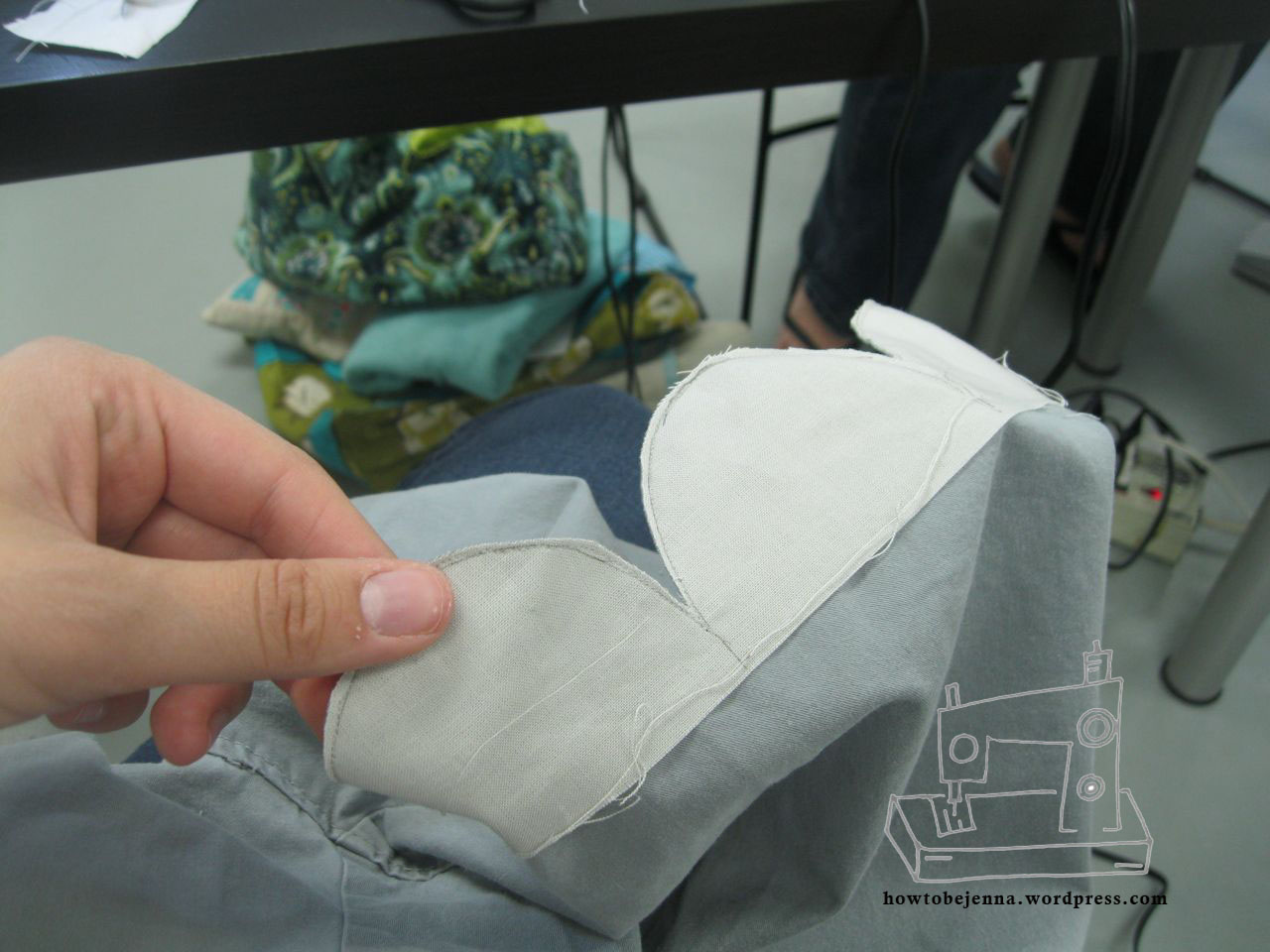
Flip the lining fabric into the shorts. The valleys between the scallops may look a little funky. Use your seam ripper to knock out a couple of these threads and things will lay flat.

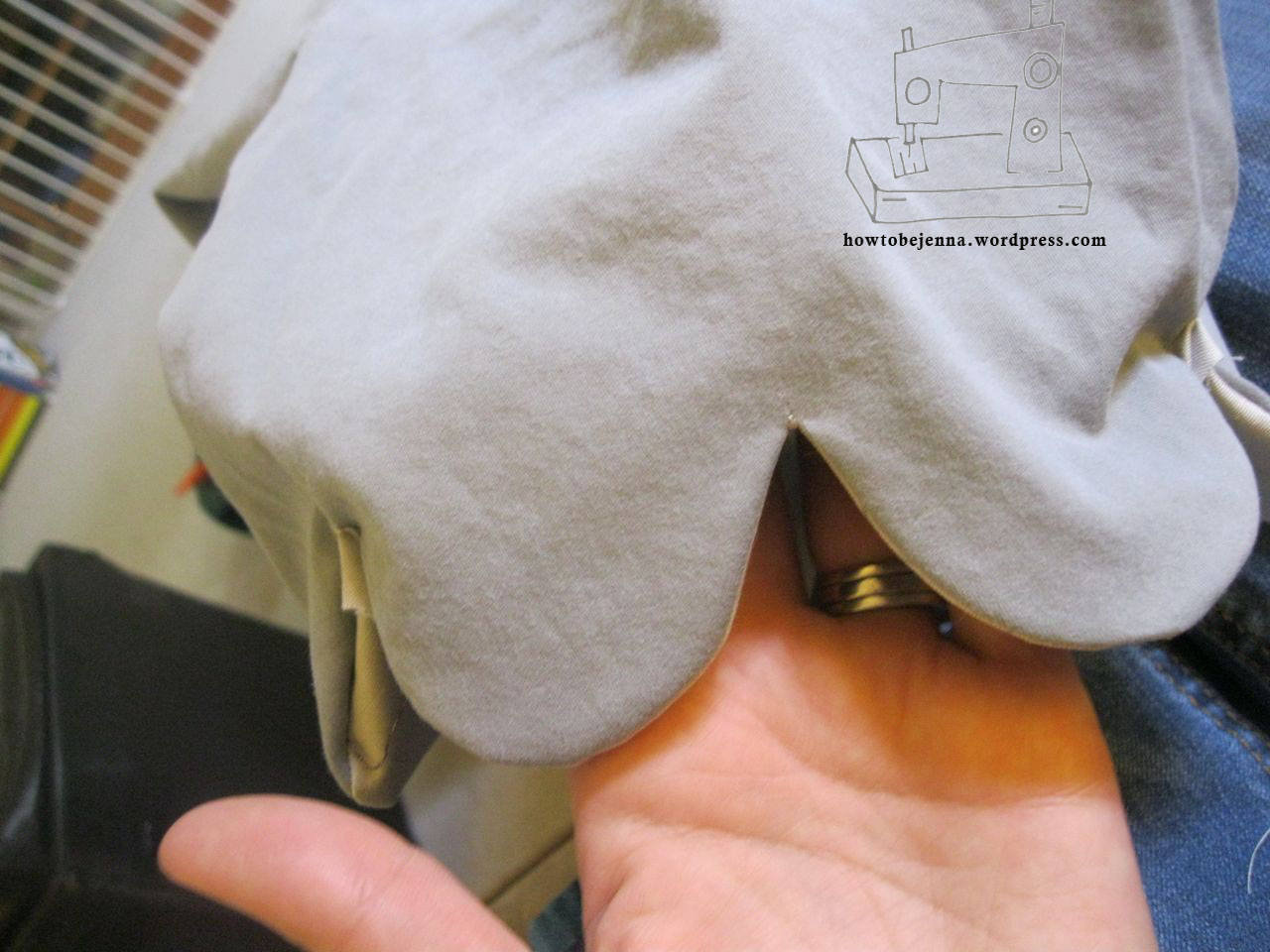
After ripping out a couple of stitches in the valleys, things look great! If you are going to top-stitch your shorts, no worries here. If you are not planning on top-stitching, you will want to blind stitch the valley where you snipped the stitches so things don’t fall apart.

Top stitch the scallops for a finished look.  You can also blind stitch a folded over edge of the lining material to the inside of your shorts.  This will keep everything laying nice and smooth even after washing.

3 Comments

Filed under Clothes, Techniques, Tutorial

Reverse Appliqued Snowflake Table Runner

Here is a reverse-appliqued table runner I made for my house for the winter.

Shown here on a bench because my table is a disaster.

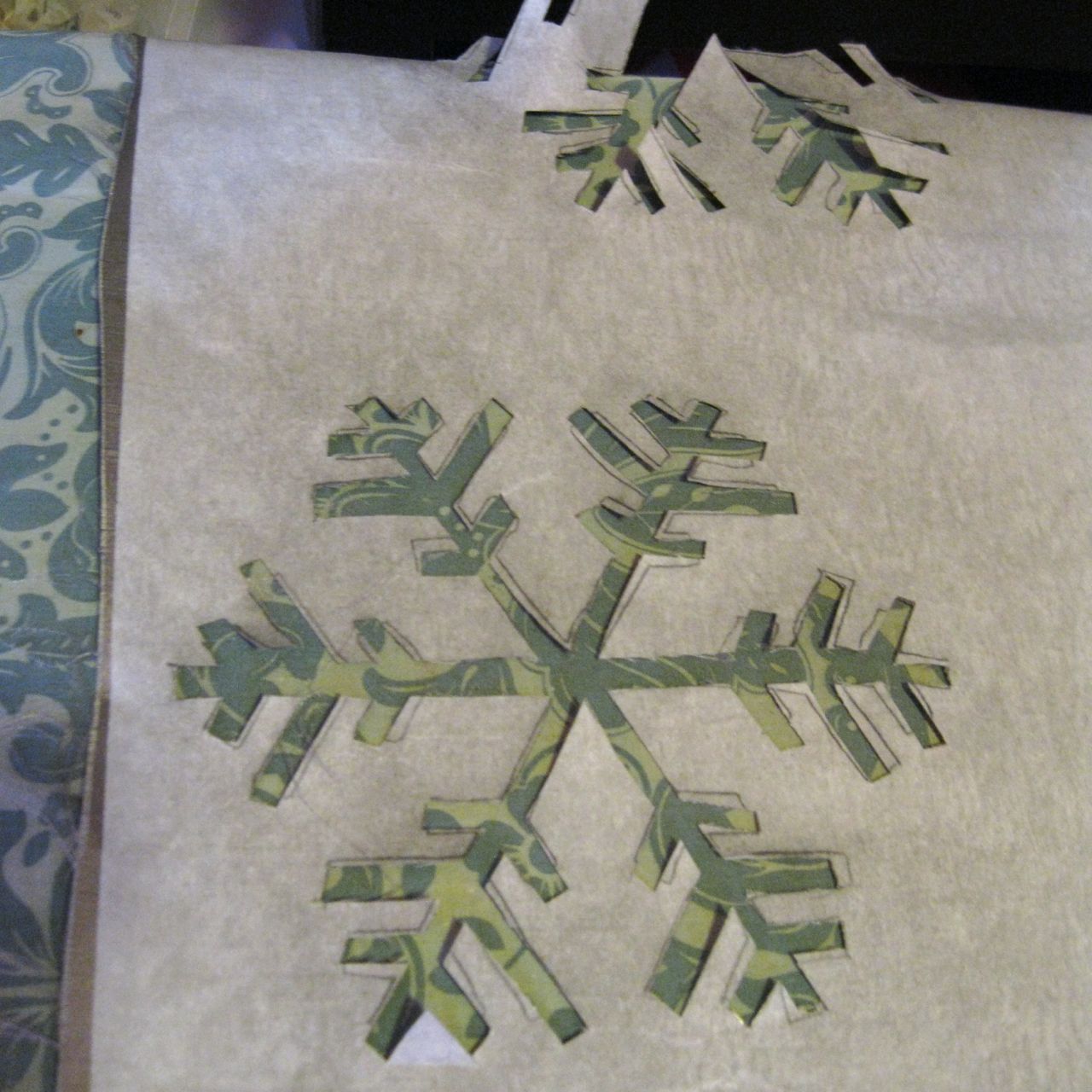
To make this start with a piece of your main fabric (mine was a duponi silk in grey/silver).  Back it with Wonder-Under (a double-sided fusible interfacing that is paper-backed so you can fuse one side at a time).  On the Wonder-Under, draw your snowflake shapes and then cut them out with sharp scissors.

Remove the paper backing.  Carefully place the main fabric on top of your accent fabric (both fabrics have right-side-up.  You are fusing the right side of the accent fabric to the back side of the main fabric).  Iron to fuse.

Next I sewed a backing fabric on to the runner.  I placed my backing fabric on top of the runner, right-sides of my backing fabric touching right-sides of the main fabric.  I sewed all the way around, leaving a gap to turn the runner right-side out.  I did not include batting, but you could if you wanted a thicker runner.

Once it was right-side out, I did a quilted stippling design.

Yay!  I have to say I really love this one.

1 Comment

Filed under Holiday, Quilting, Techniques, Tutorial

Princess Leia costume for babies and toddlers

For today’s costume party tutorial, we’re making Princess Leia costumes for babies and toddlers!
The components of this costume are:
  • Hat with buns
  • Dress
  • Belt

The Hat:

  • For the hat, I first made the Sweet Pea Pilot Cap in brown, with matching brown ribbing.  The free tutorial can be downloaded HERE thanks to Meg at Sew Liberated.  Make sure you buy enough of the brown jersey to make buns that will match the hat.
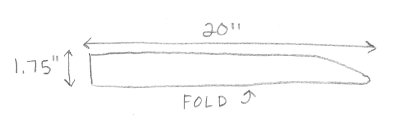
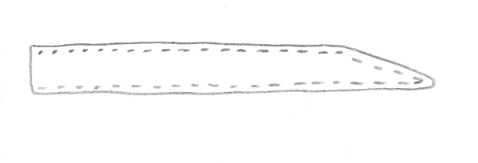
  • Once your cap is completed, cut two long and skinny rectangles of fabric.  I believe mine measured 3.5 inches wide by 20 inches.  Fold each rectangle in half (good sides together) so it becomes 1 3/4 inches wide by 20 inches.  Press flat.  Taper one of the short ends so it looks like this:
  • Sew from the tapered end down the long edge.
  • Turn the tube inside out and stuff not too tightly with Poly-fil (stuffing).
  • You can either machine or hand sew the short end closed.  It will be covered by the coiled bun.
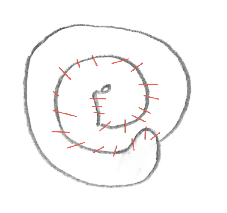
  • Coil you bun in such a way that you cover the short end and you tuck the tapered end behind the bun.   One side of the bun will look pretty,  the other side will be “ugly,” showing the tucked in tapered end of the tub as well as the short hand/machine sewn shut end.
  • Whip stitch the bun from the “ugly” side so that it is a free standing, permanently coiled unit.
  • Sew the bun to the side of your pilot cat by hand using your best blind stitch.

The Dress:

  • For the dress I actually used the sleep sack pattern from the book Growing Up Sew Liberated.   It was a very easy pattern to follow and if you don’t put the elastic in the bottom to make it a “sack,”  it makes a very comfortable and forgiving dress for babies 6 – 12 months.  It has an envelope / onesie type top that makes it very easy to slip onto toddlers and does not necessitate snaps or zippers.
  • Although I HIGHLY recommend the sew liberated book if you have any interest in making clothes for children, another option would be to use a long-sleeved white t-shirt or onesie and to make a simple elastic waisted white skirt maybe by using THIS tutorial.

The belt:

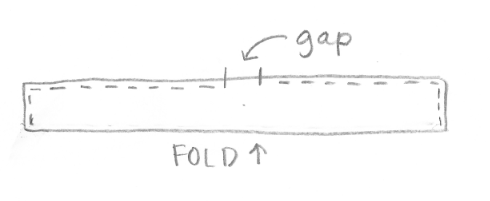
  • From a white fabric I cut a rectangle 4 inches by 22 inches.  Fold the rectangle in half (good sides together) and sew all sides together except for a small gap.
  • Turn the rectangle right-side out through the gap.  Tuck the seam allowances into the gap and press the entire belt flat.  Top-stitch around the rectangle, closing the gap.
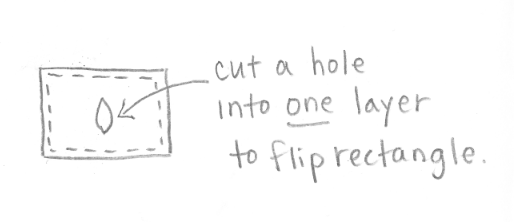
  • To add a silver detail I used a slippery acetate fabric I bought on the super-cheap.    Cut two 2 x 8 inch rectangles from the silver fabric.  Place them good sides together and sew all around the edges**.   Trim down the seam allowances to a very tight 1/8of an inch.  Pinch one layer of the fabric from the rectangle and snip a one inch hole so you can turn the entire unit inside-out.   Press your perfect rectangle flat.
  • **You could also do the method where you sew around all of the edges, except for a small gap where you turn the unit inside-out and then either hand-sew or machine top-stitch the gap closed.  I find the acetate a little difficult to work with, so I opted for the method described above.
  • Hand sew the silver rectangle to the white belt.  You could machine sew the rectangle to the belt, but I find the acetate a little difficult to work with in my machine.
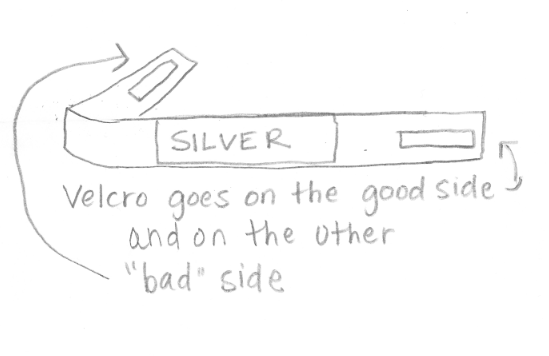
  • Attach velcro to the appropriate ends of the belt.  I used fusible velcro.
  • You’re done!  Marvel at your adorable Leia, sure to make any Han Solo swoon.

3 Comments

Filed under Crafts, Holiday, Tutorial

Tutorial: Square-In-A-Star-Block

This blog post relates to this tutorial I did for continuous seams…

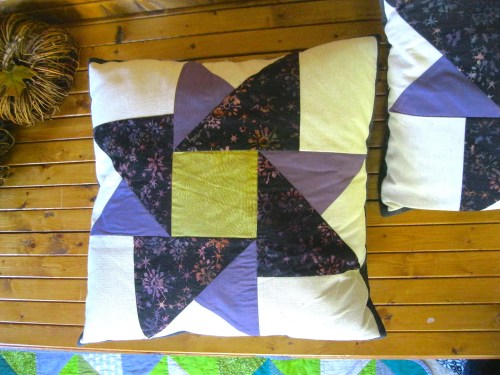
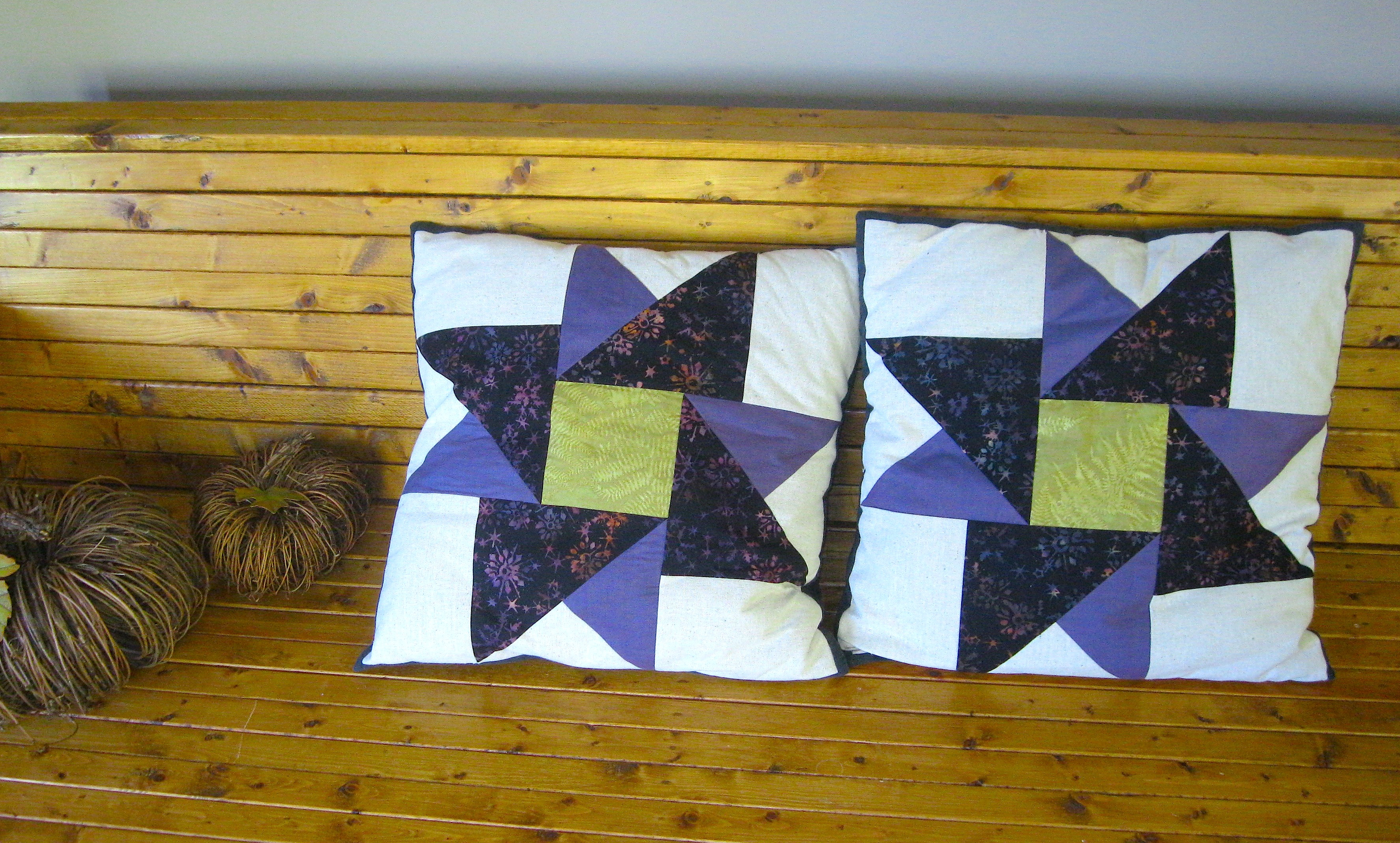
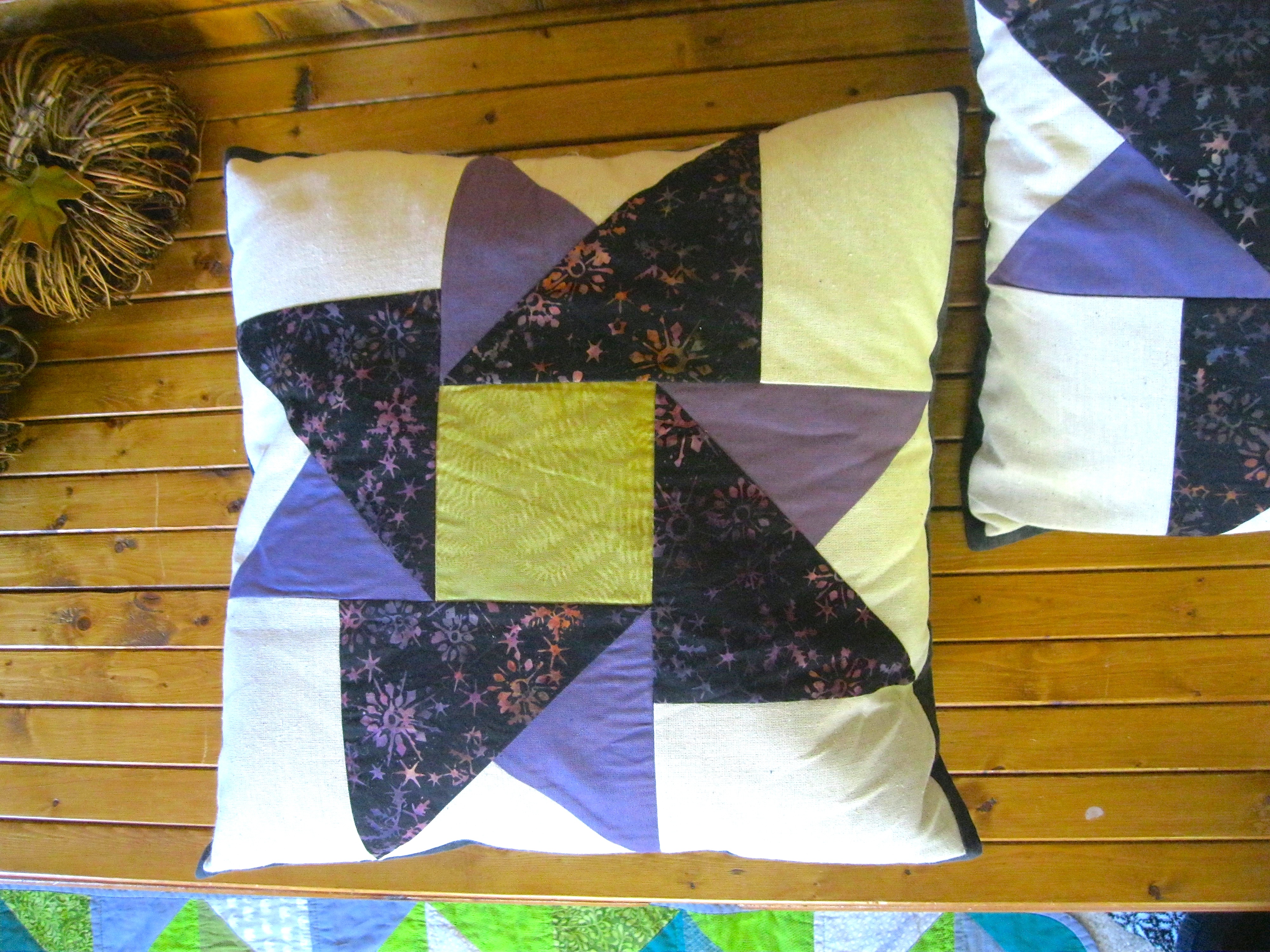
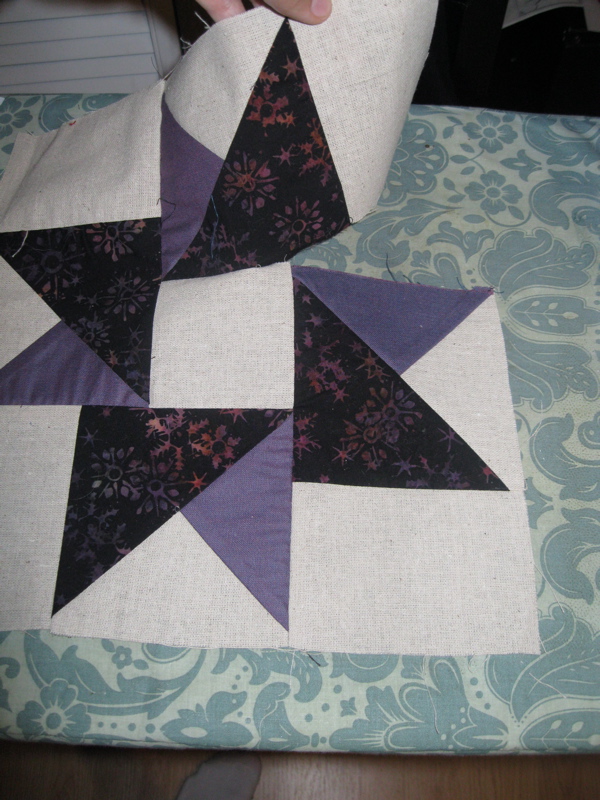
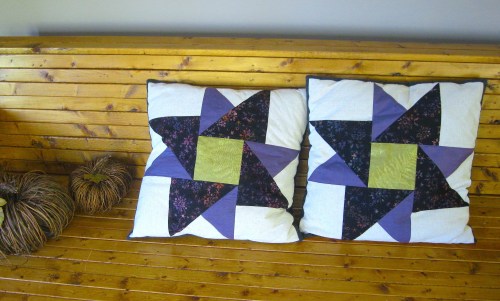
Look at these pillows I made!  These are for the Halloween season.
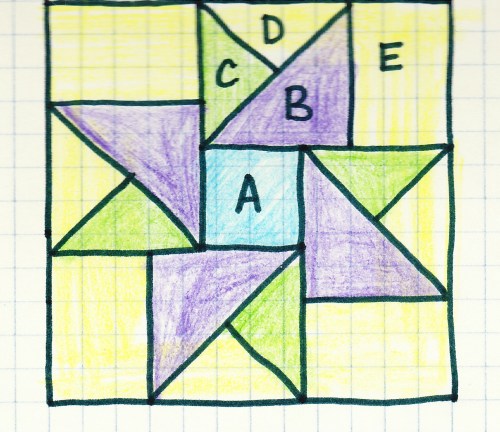
Not sure if this block has another name, but I’m calling it Square-in-a-Star!  Lyrical, poetic block-naming talent just flows through my veins, what can I say?

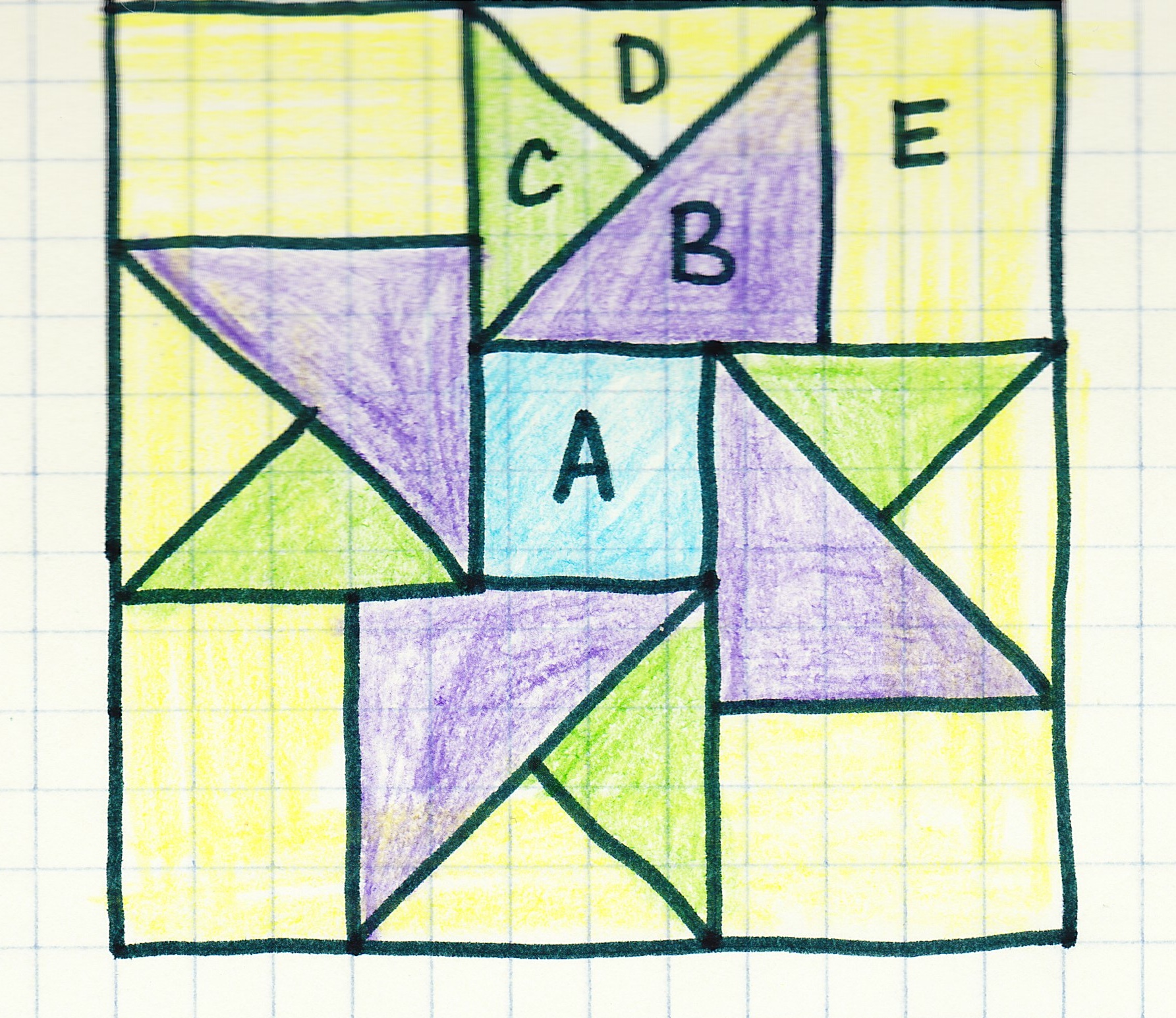
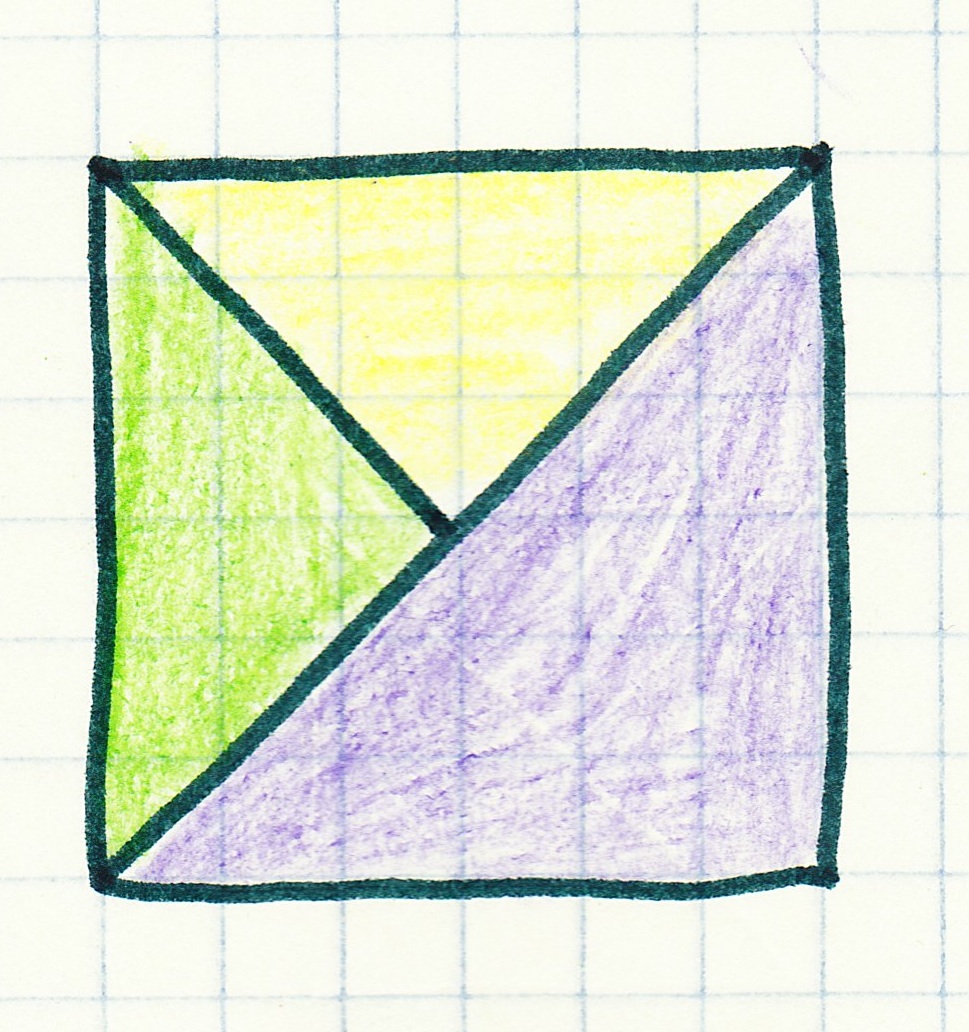
So here’s the block:
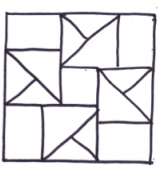
If you would like a 12inch finished block, here are the measurements for one block: (16inch block measurements below).

A – One square 3 1/2 inches (3 inches finished)

B – Cut two 5 3/8inch squares into 4 triangles.

C-  Cut one 5 3/4inch square into 4 triangles**

D – Cut one 5 3/4inch square into 4 triangles**

** Do not do a short cut for assembling quick QST (quarter square triangle) blocks.  It won’t work – I tried.  It won’t work because you will always need the C unit to be on ONE side of the D unit.  If you do the shortcut you’ll have mirror imaged blocks like a FOOL.  Just cut out the triangles and sew them together to make the two QSTs into one HST (half square triangle).

E – Four 3 1/2 x 5 1/2 inch rectangles in the same fabric as unit D.

And here are the measurements for a 16-inch finished sized block.

A – One square 4 1/2 inches (3 inches finished)

B – Cut two 6 7/8inch squares into 4 triangles.

C-  Cut one 7 1/4inch square into 4 triangles**

D – Cut one 4 1/2 x 6 1/2 inch square into 4 triangles**

** Do not do a short cut for assembling quick QST (quarter square triangle) blocks.  It won’t work – I tried.  It won’t work because you will always need the C unit to be on ONE side of the D unit.  If you do the shortcut you’ll have mirror imaged blocks like a FOOL.  Just cut out the triangles and sew them together to make the two QSTs into one HST (half square triangle).

E – Four 3 1/2 x 5 1/2 inch rectangles in the same fabric as unit D.

If you would like to adjust these measurements to make a different sized finished block, just remember… whatever finished size you would like this unit:

…you’ll need to take that number and add  1 1/4 for the QST units.  For example, if I’d like the square to finish to a 4 1/2 square, then I will need to cut make my C and D units from a (4 1/2 + 1 1/4) 5 3/4 inch square.

and you’ll need to add 7/8 inches for the HST units.  For example, if I’d like the square to finish to a 4 1/2 square, then I will need to cut make my B units from a (4 1/2 + 7/8) 5 3/8inch square.

If you’d like, you could make the A square be of the same fabric as the D and E units.  Just another option!

Assembly Instructions:

Sew triangles C and D together, always making sure you keep C on the same side of the D unit.  (Always to the left if you look at the block this way…)
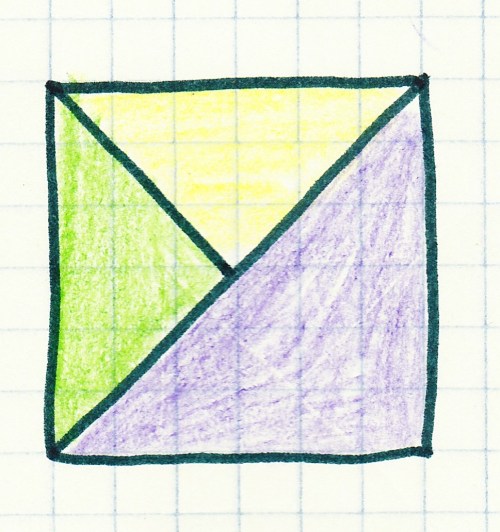
Sew the C/D HST unit the the B unit.

Sew E to the C/D/B unit.

To finish the rest of this block, refer to this blog post.  (Sorry to make you jump posts, but it’s just easiest this way.  I’m not digging for blog hits or anything, I don’t make money off of this blog).

There you go, dears!  Enjoy!

Leave a comment

Filed under Techniques, Tutorial

Tutorial: Right-Angle Seams Cheater

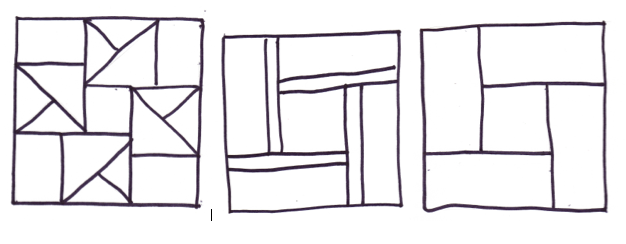
Take a look at these block patterns:

Looks like you’d have to do a Right-Angle seam, doesn’t it? You don’t!
Here’s how you can make these blocks (and many more) with continuous, straight seams.

Continuous Seam Tutorial:

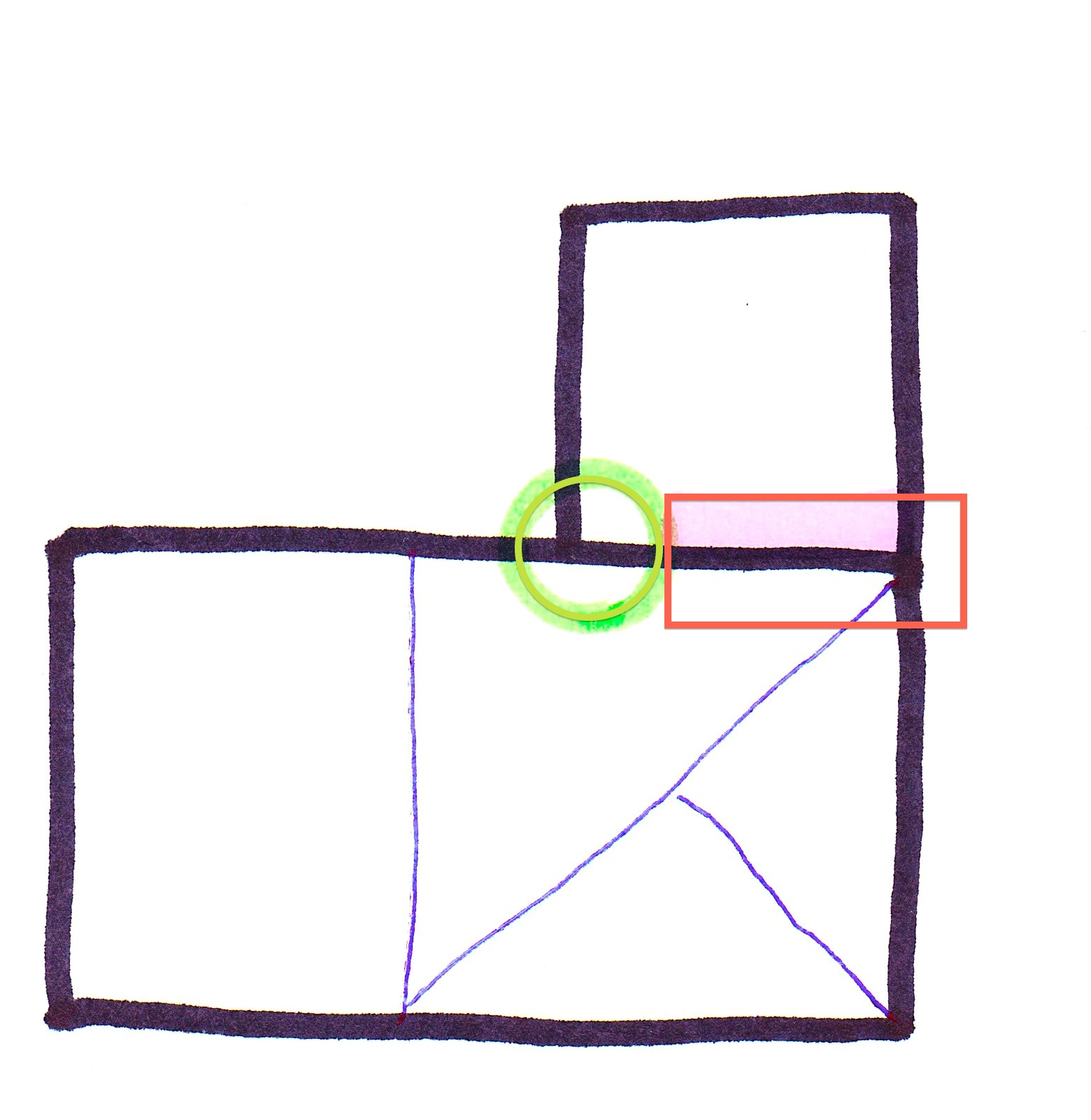
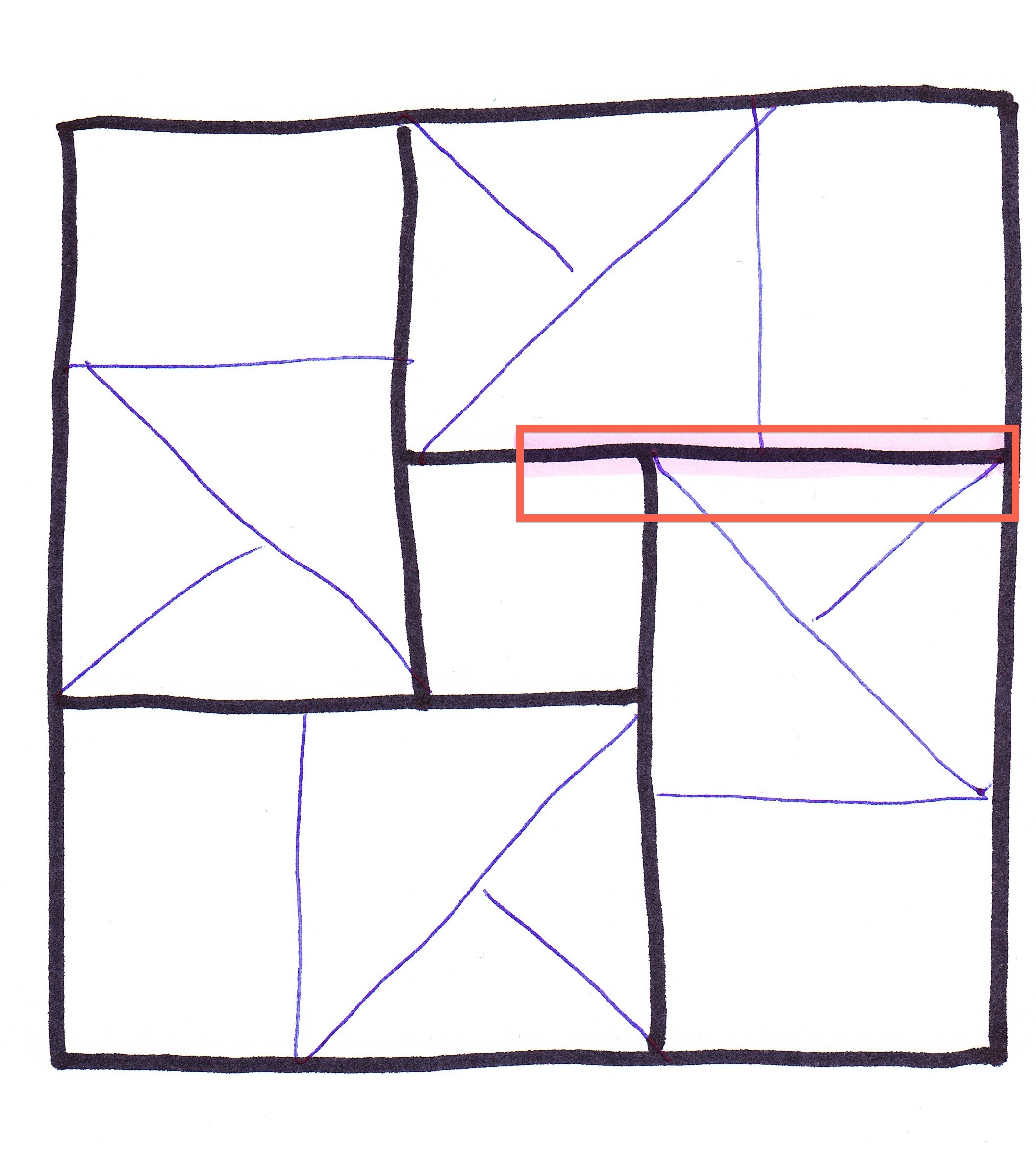
In the images below I highlight the seams you need to sew with a red rectangle.   To clarify, you sew these blocks by placing the units on top of each other, right sides together, then open and press the seam as you like (whether that be by pressing the seams open or in one consistent direction).

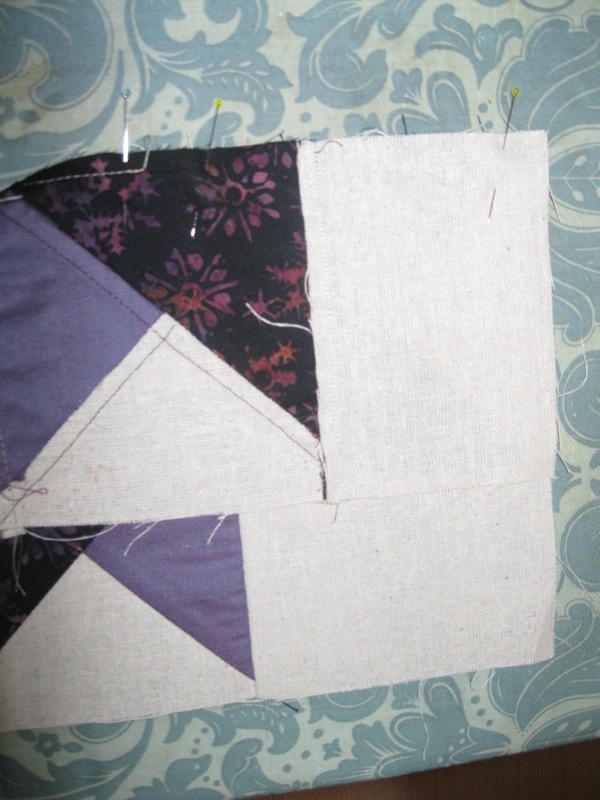
Step One: Sew your center square unit to a rectangle unit, but not the whole way. Sew only the length of the red rectangle, but not inside the green circle. The key here is to sew more than 1/4inch long, and to leave more than 1/4inch of free space.

Step Two: Sew on the next rectangle unit, this time for the whole length (highlighted by the red rectangle). This is similar to sewing log cabin blocks, if you're familiar.

Step Three: Sew on the next rectangle, again for the entire length (highlighted by the red rectangle)

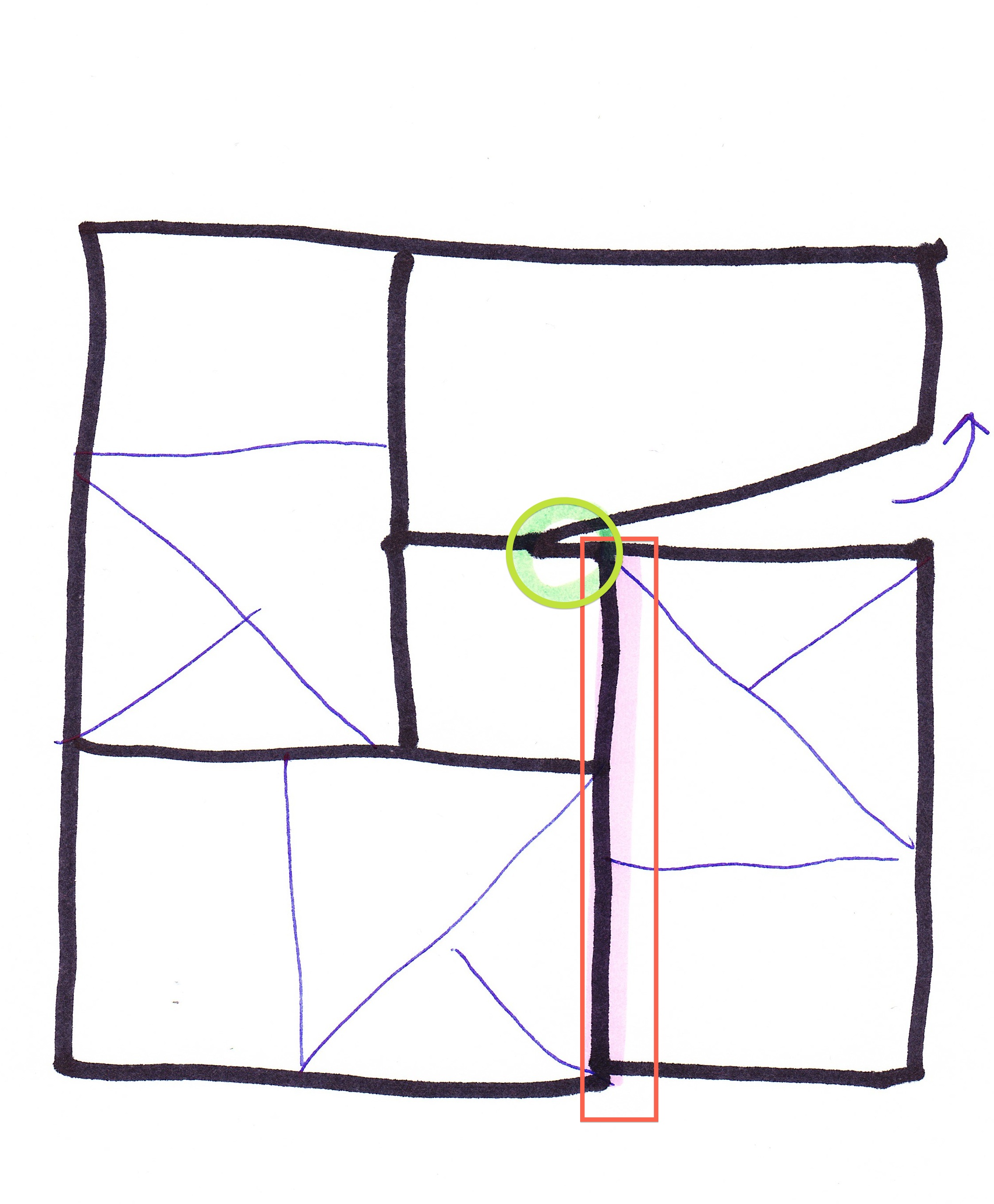
Step Four: To sew on the next rectangle unit, you'll have to scootch the first rectangle unit you attached out of the way. This will be easy to do because you did not sew within the green circle back in Step One. Attach the rectangle unit.

Step Five: You now need to finish the seam you started in Step One. Fold the first rectangle unit over the square, right sides together, and finish the seam you started, making sure to reinforce the start of this new seam by going backwards and forwards first. You're done!

Here are some pictures showing that last step…

Ready to continue this seam!

Can you see the white thread? That's the seam I started in Step One. I am pinning my units together and am going to sew, continuing that first seam to the edge of the unit.

I did it!

Do you like the block featured above?  I will do another post soon with some more tips on assembling that block.  Stay tuned!

3 Comments

Filed under Techniques, Tutorial