Lynn’s Atomic Pinwheels

atomic

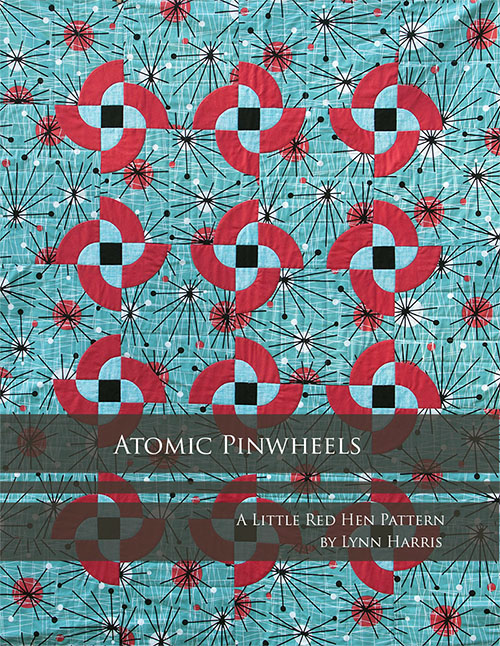
When Lynn showed us her quilts made from her newly released pattern, Atomic Pinwheels, I knew I’d like to try this design myself!  So I volunteered to be one of the pattern testers and gave it a whirl.

6a00e54efbe3a18833017d42431032970c-500wi

This design features a really cool piecing method where you do partial seams and really build the entire quilt top quite fast!

atomic1

And as for the curved piecing – I can always use the practice.  The inner quarter circle pieces were quick and easy to piece into the arches.  Getting the arch units to go into the larger rectangles took a lot of pins and patience for me, as I’m still learning.

When it came time to quilt I wanted to pick a design that highlighted the movement of the pinwheels and the details of the circles within the blue patterned fabric.

Thanks, Lynn, for giving me the chance to try out this excellent pattern!

3 Comments

Filed under Pattern, Quilting

Trapezoids at Work – Finished Quilt!

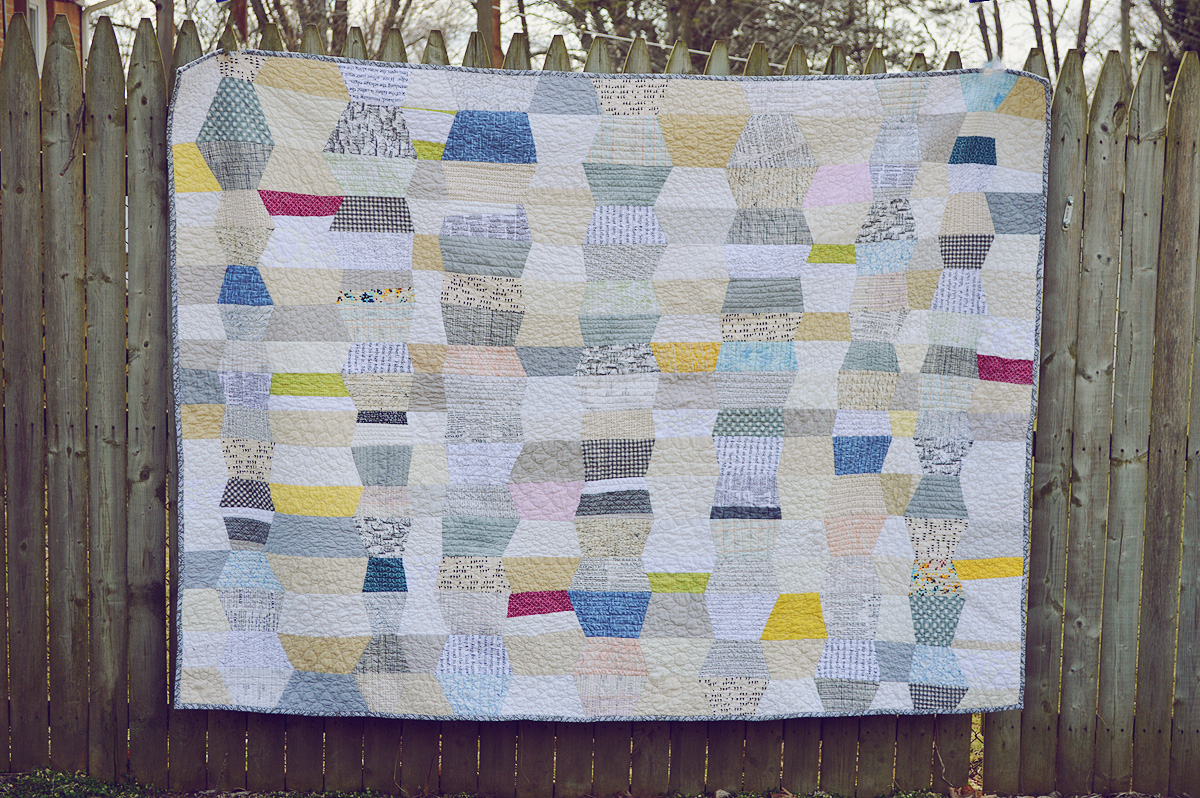
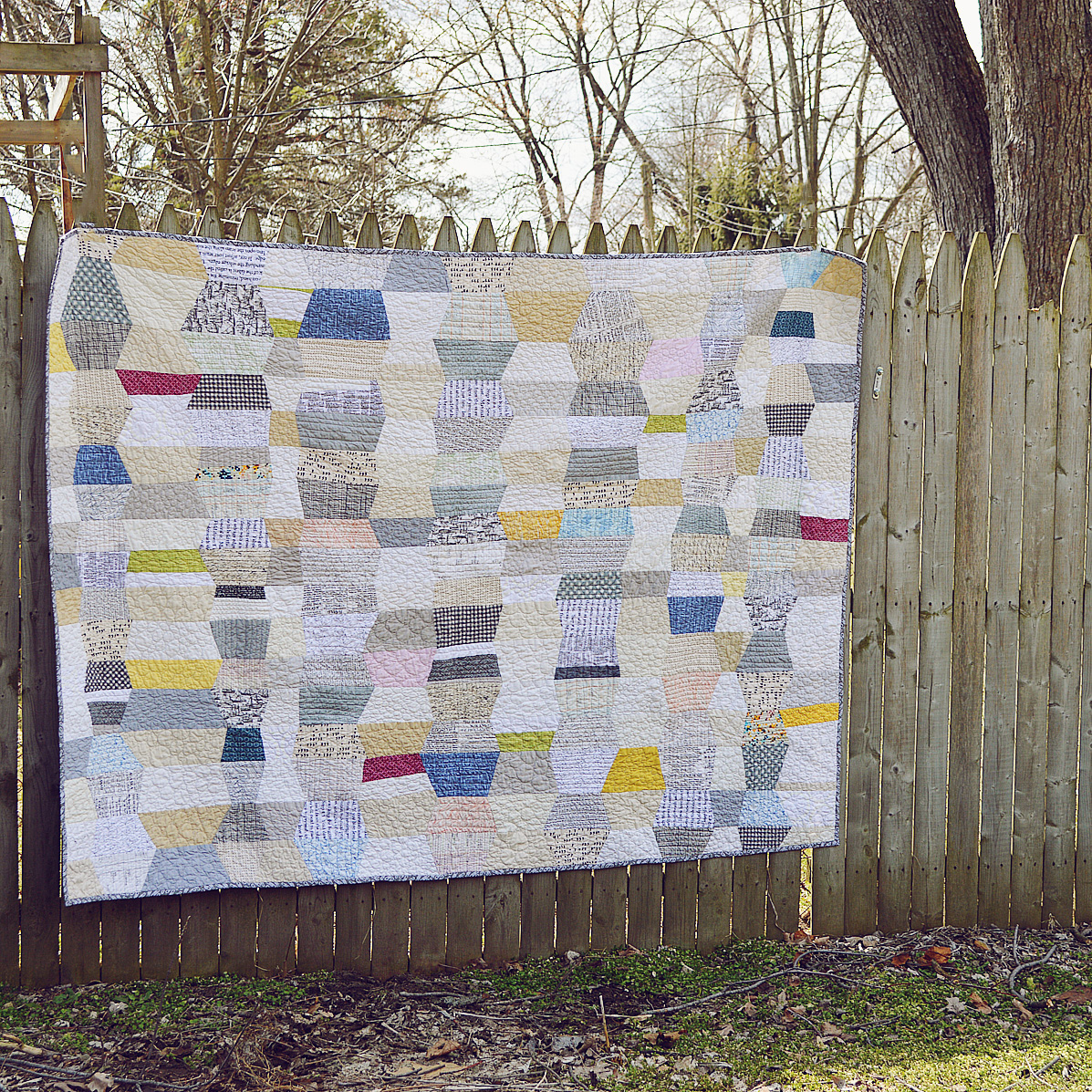
Trapezoids at work!  Quilted and bound…

traps-done1

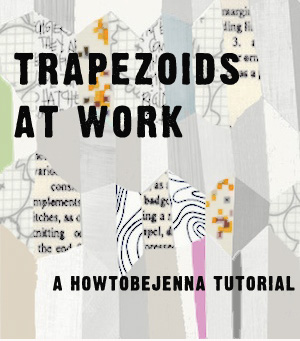
I did a tutorial for this quilt when I finished piecing the top.  It can be found HERE.

traps-done3

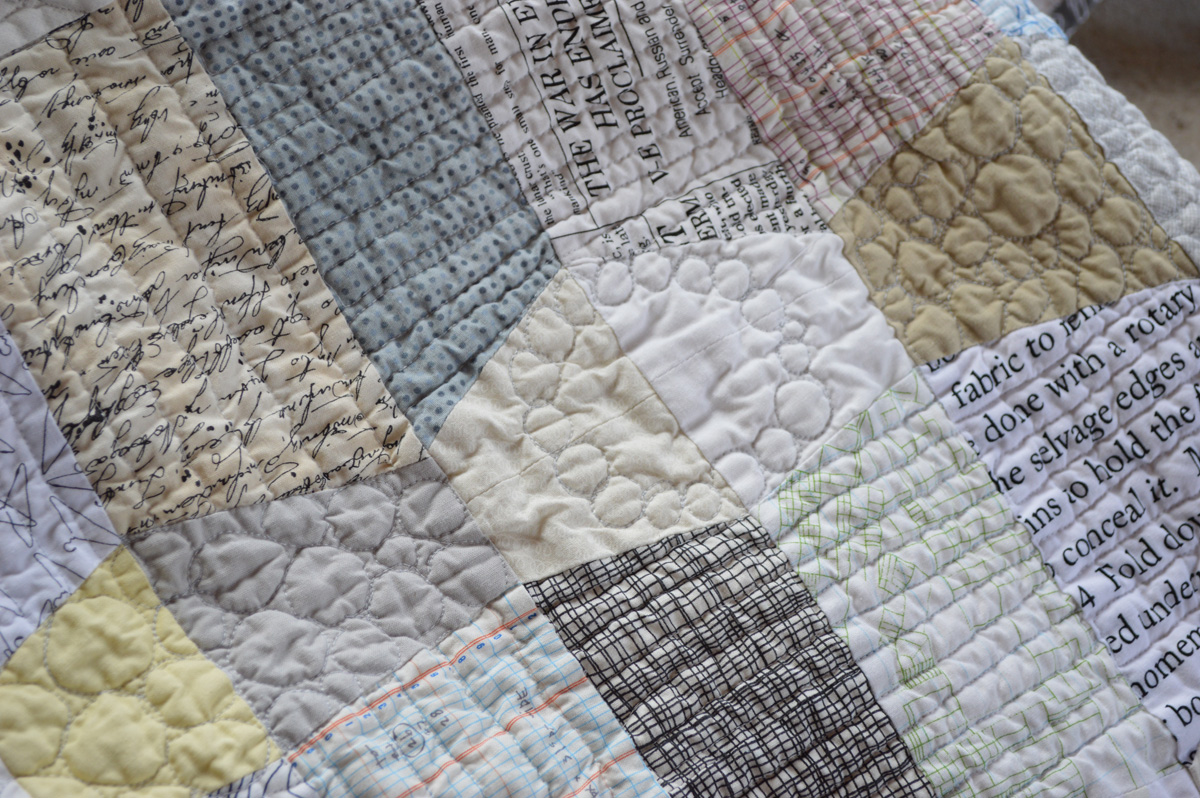
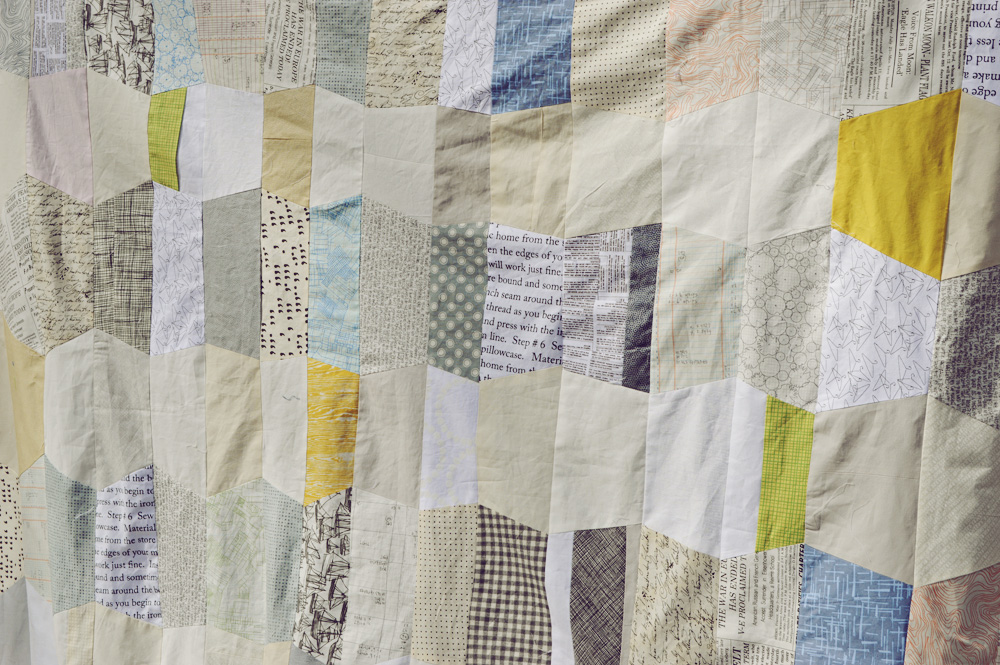
I wanted the “columns” of trapezoids to alternate between Business Fabric (texty prints, grids, organized dot prints, a lot of Architextures) and neutral solids, with a couple of color splashes for fun.

traps-done2

The inspiration was how my mind floats around while I work.  There are periods of focus and periods of distraction, dreaming, spacing-out…  You know how it goes!

close-1

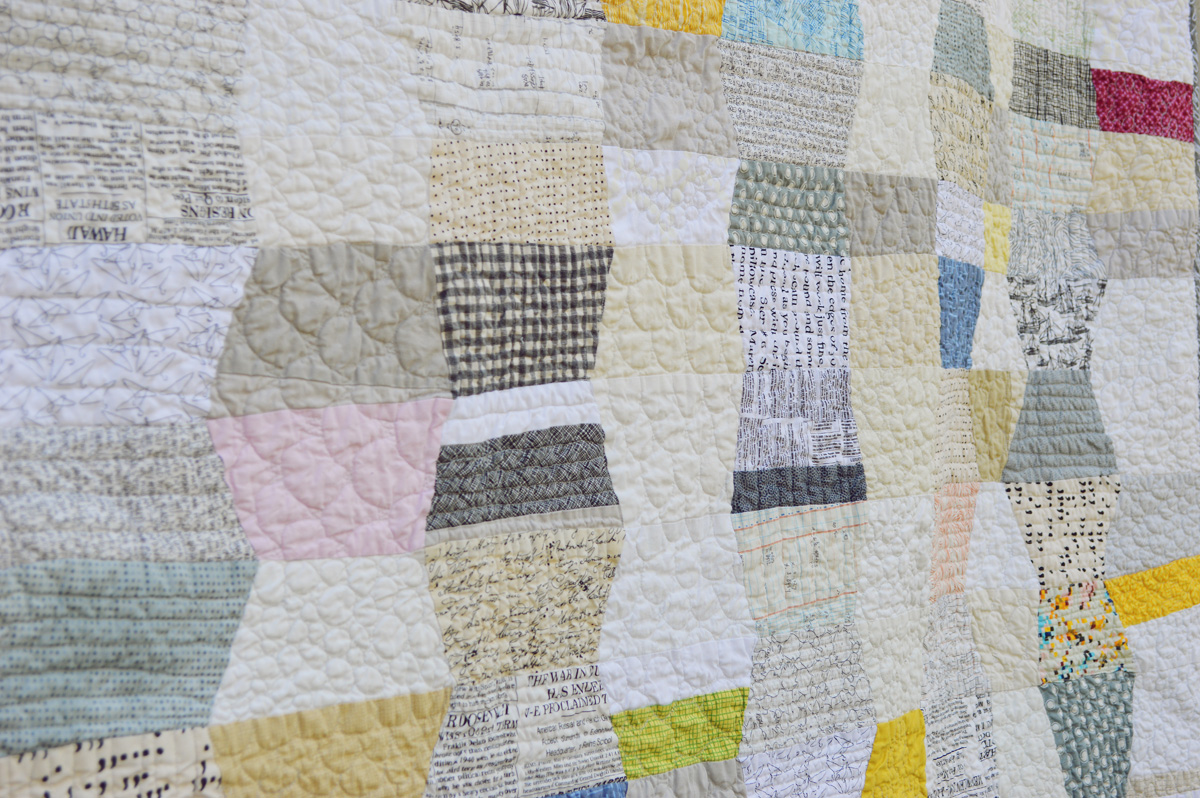
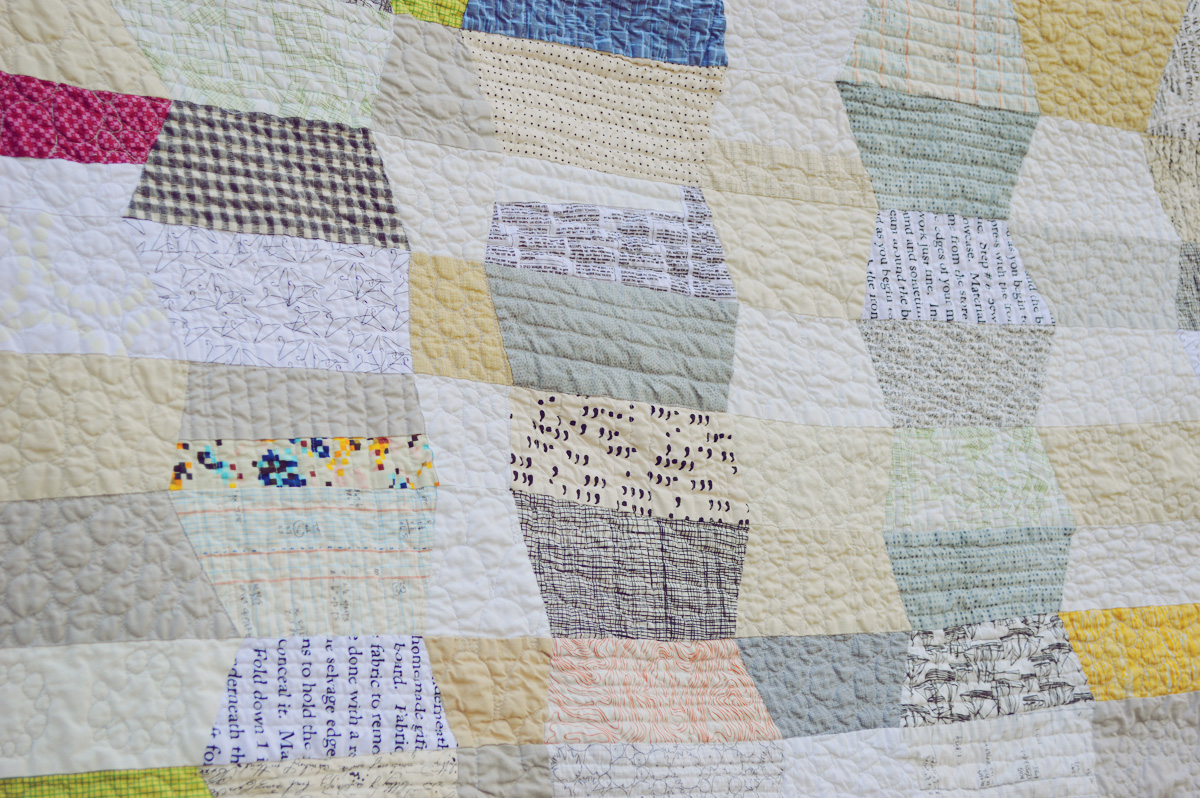
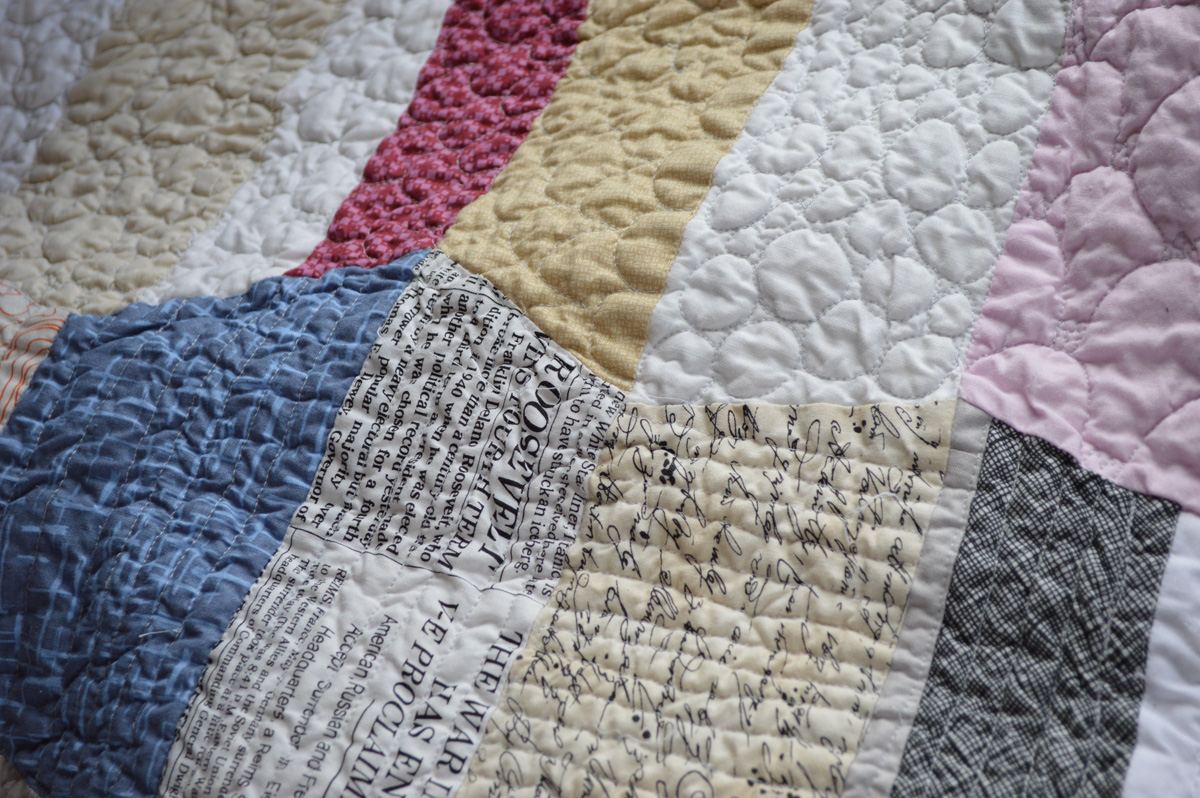
I carried that idea into the quilting.  Dense linear quilting for the WORK areas, and floaty circular quilting for the dreaming spaces.

close-3

A couple of rings of pebbles as a nod to the pearl bracelets fabric that makes an appearance in this quilt…

close-2

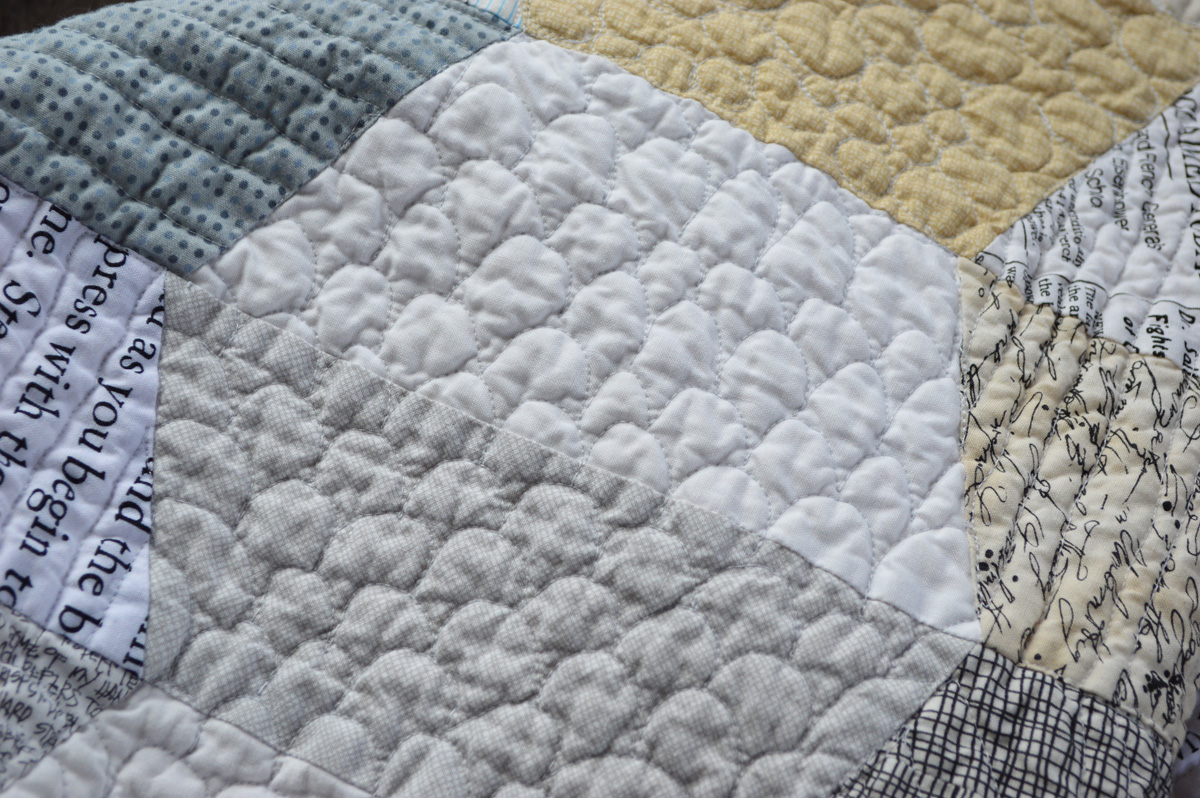
Happy little dreamy scallops…

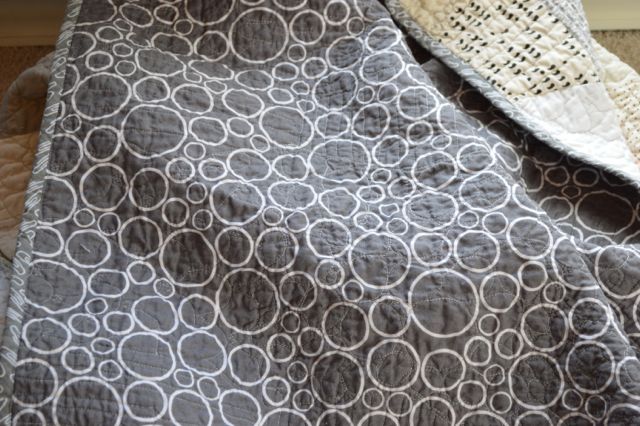
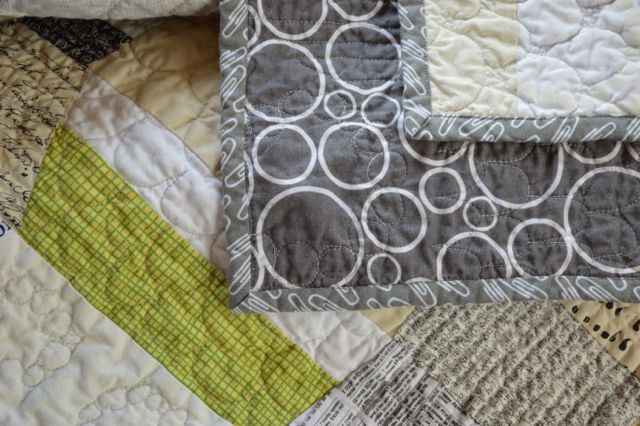
The backing fabric is a 108″ wide Spot On Wide Circle in Steel.  Pink castle fabrics has a bunch of different colors from this line – very handy!

DSC_0001

The binding is Paper Clips in Gray from the Type line…

DSC_0002

traps-done4-sqaure

I hope ya’ll like it!  I love it when a plan comes together – this is really exactly how I wanted this guy to look and everything turned out!  Happy claps!!

14 Comments

Filed under Fabric, Quilting

Trapezoids at Work – Quilt Top and Tutorial

traps-1

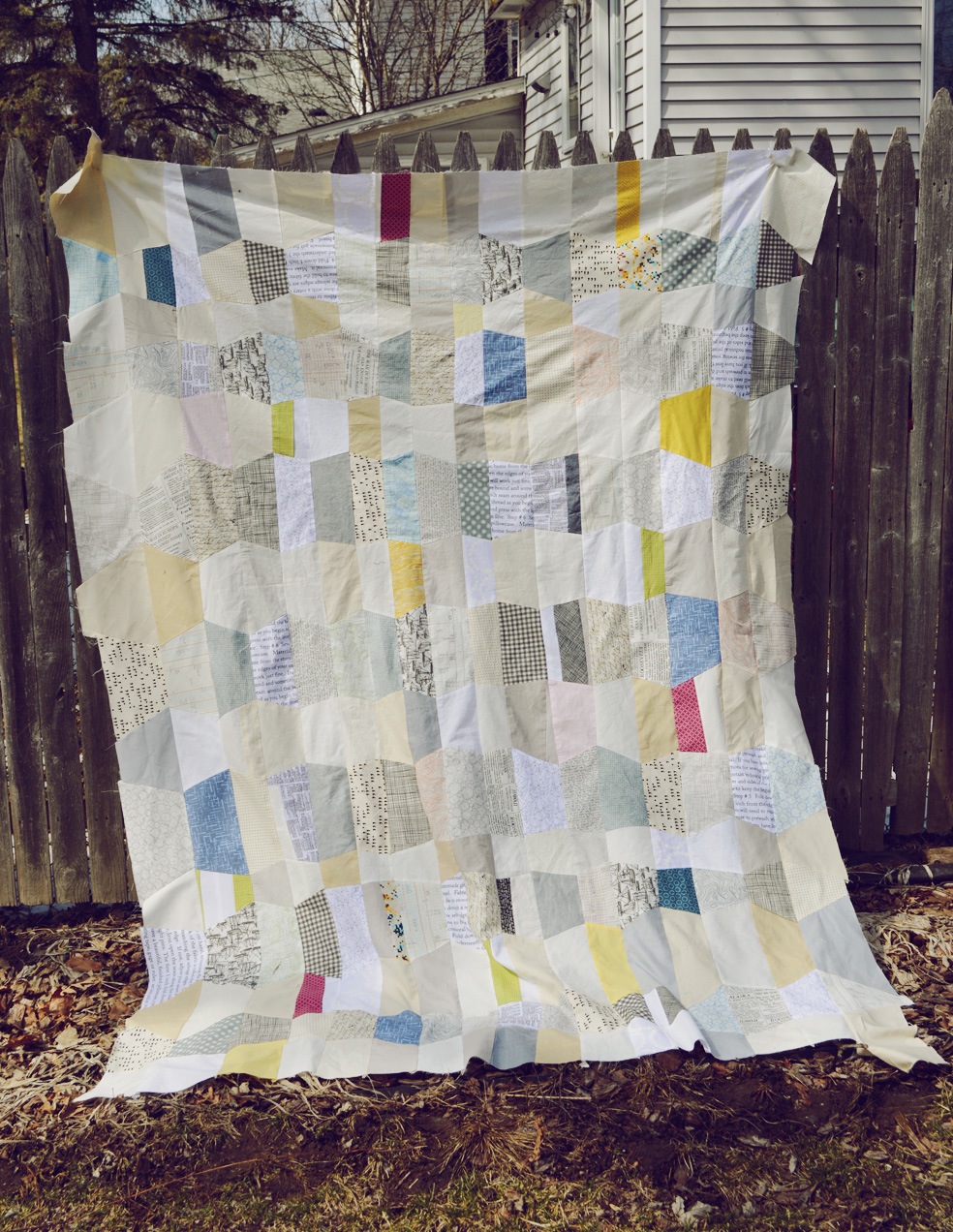
After seeing THIS IMAGE float around pinterest ( “Trapezoid Love” by Melanie Mikecz), I knew I wanted to do a wonky tumbler quilt.  And, like the inspiration piece, I wanted my points to match.  Wow… how was I going to make a liberated trapezoid quilt (no meticulous calculating and template-making), and still get the points to match?

traps-3

It took a couple of unsuccessful trial runs before coming up with this method.  It’s not for everyone – at the end, you’ve got the entire quilt-top in your lap and you’re completing seams and wrestling and it’s a bit gnarly.  But I LOVE the final product.  I see more of these in my future…

traps-2

I’ll chat a bit more about this quilt when I finish quilting it and binding it, but for now – a full tutorial!  I have no idea if the below will make any sense, but I tried my best and… you know… it’s free for you to read.

traezoidsatwork copy

Continue reading

4 Comments

Filed under Fabric, Inspiration, Pattern, Techniques, Tutorial

Spring cleaning

Spruced up the blog a bit!  Changed the header, changed the “About Me,”  added this fun little nerd so you can troll me on Instagram:

Instagram

and I added a new page tab up top.  Modern Art Lessons has replaced the Costume Party, which I will make live again at the end of the summer.  The Modern Art page has the introduction and a list with links for all the posts on the topic.

Hope everyone approves!

Leave a comment

Filed under Uncategorized

Modern Art Lessons – Futurism

In today’s Lessons in Modern Art for the Modern Quilter, we’ll examine the Italian tech-savvy artists of their time — the Futurists!

artbutton2

From about 1910 – 1920 an unofficial group of Italian artists became fascinated with modern technologies, and the new urban environment.  They wanted to make art that truly embraced the hustle-and-bustle of a metropolis.  How can flat paintings convey the tremendous motion of a busy city?

The new technology of chrono-photography showed these artists one way to show movement within a static frame.  Chronophotography was the use of a special camera (one with many lenses – as many as 12) that would take several pictures in rapid succession.  These frames could then be displayed together or even overlapped to convey movement.

a sample of "Chronophotographie d'un chien courant"  by Étienne-Jules Marey

a sample of “Chronophotographie d’un chien courant” by Étienne-Jules Marey

Compare the chronophotigraphic work above to this Futurist painting by Giacomo Balla.   True story, this is one of my favorite paintings : )

Dynamism of A Dog on a Leash (1912) by Giacomo Balla

Dynamism of A Dog on a Leash (1912) by Giacomo Balla

There were also major developments in the Optical Sciences during this time.  Artists interpreted the theories presented in recent scientific developments to mean that colors would get a stronger luminescence if pure, unmixed dots or strokes of pigments were set next to each other.  Then the viewer would mix the dot colors together with their eyes, creating a more vivid look to the work.  This method of painting is called Divisionism and is a by-product of the Impressionist movement of Pointillism.   Pointillism was more focused on the paint-stroke style of juxtaposing pigment dots, and was not as concerned about the optical science basis of the separation of colors.

The most famous example of pointillism is this “A Sunday on La Grande Jatte” by Georges Seurat in 1884.  Here is an extreme close-up so that you can see the many dots of pigments:

points

For a look at the Divisionist technique we can look at this:

Sea = Dancer (1914) by  Gino Severini

Sea = Dancer (1914) by Gino Severini

Not only does this work showcase the brush style of many small quick, unmixed strokes to create a vivid color representation, but it also is conveys movement and an even 3-D quality.

Combining the theories of technology and Pointillism / Divisonism, I believe the pixelated quilt trend, now offered as a class by Caro Sheridan, gels with a discussion of Futurism.  My favorite pixelated quilt?  Hello! The Ron Swanson quilt by Monica Solorio-Snow who blogs at thehappyzombie.com  :

Image used with permission.  The Ron Swanson quilt by Monica Solorio-Snow

Image used with permission. The Ron Swanson quilt by Monica Solorio-Snow

Digital photography has become the norm and with that comes the use of computer photo-editing software.   Concerns regarding DPI (dots per inch) or PPI (pixels per inch) have crossed over from the technological world into our sewing designs!  Modern Quilters certainly are linked to modern technologies – uploading images to their blogs, joining link-up parties, using every latest mode of social media; we can use the term MODERN to mean of-the-moment and up-to-speed, but it’s also fun to look at the Modern Art style of Futurism and see the comparisons with our modern quilting movement.

Key Sources: theartstory.org and guggenheim.org

Leave a comment

Filed under Inspiration

Modern Art Lessons – Exposure to African Art

By the turn of the 19th century, colonialists and explorers transported African art to Europe.  Having stolen or otherwise obtained the items, the works were often sold to pawn shops or trinket stores.  However, after time the creations gained artistic appreciation and were showcased in a variety of galleries and added to personal art collections. Maurice de Vlaminck, André Derain, and Henri Matisse, and Pablo Picasso were all known to have collections of art from Africa. As the world broadened, exposure to the artistic works of other cultures heavily influenced the future of Western Art… so let’s take a further look into the response of Modern painters towards African art.

artbutton2

Here were representations of the human form that focused on the spiritual and eliciting emotion rather than achieving accurate, literal representations.
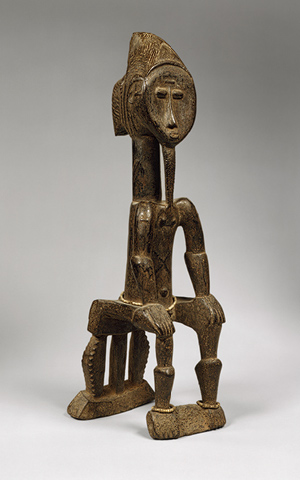
Seated Male, 19th–20th century - Côte d'Ivoire

Seated Male, 19th–20th century – Côte d’Ivoire

Referred pejoratively as “Primitive Art,” these artifacts were not seen as having artistic value until the Expressionist and Fauvist painters and sculptors started collecting the works and creating their own art heavily influenced from these African forms.

Even without any understanding of these distant cultures, Western artists could sense the spirituality evoked from these avant-garde forms.  With their other-worldly, exaggerated, elongated, transformed and imaginative representations of human features – African art transported the viewer outside of the literal everyday. Freed from the restrictions of depicting naturalistic representations of the corporal form, artists tapped into their imaginations and into their own spiritual sides as they created art from visions within the human mind and soul.

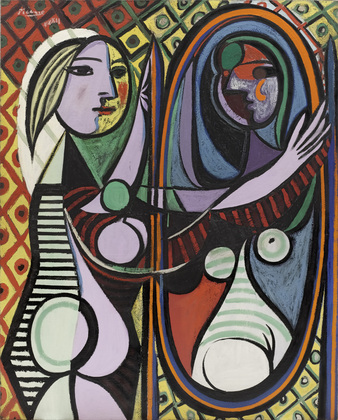
“I paint things not as they look, but how I see them” – Pablo Picasso

Girl before a Mirror - Pablo Picasso - 1932

Girl before a Mirror –
Pablo Picasso – 1932

Key Sources: artguidenw.com, metmuseum.org

Tapping into unknown cultures, drawing inspiration from the works of “isolated” communities, certainly one thinks of the profound impact exposure to the quilts of Gee’s Bend had on the birth Modern Quilting movement.

Lucy T. Pettway - "Housetop" - 1945

Lucy T. Pettway – “Housetop” – 1945

Living in rural, geographically isolated Gee’s Bend, Alabama, a society of hard-working women used what fabric scraps were available to create glorious, graphic, imaginative quilts in order to keep their families warm.

“The compositions of these quilts contrast dramatically with the ordered regularity associated with many styles of Euro-American quiltmaking. There’s a brilliant, improvisational range of approaches to composition that is more often associated with the inventiveness and power of the leading 20th-century abstract painters than it is with textile-making,” says Alvia Wardlaw, curator of Modern and Contemporary Art at the Museum of Fine Arts.

The world of quilt making was forever changed after the discovery (and subsequent exploitation – can I say that?) of these magnificent creations, heavily inspiring the work of Modern Quilting founders including Denyse Schmidt – check out THIS QUILT and THIS ONE.

1 Comment

Filed under Inspiration

Pattern Walkthrough – Vogue 8615 in Jersey

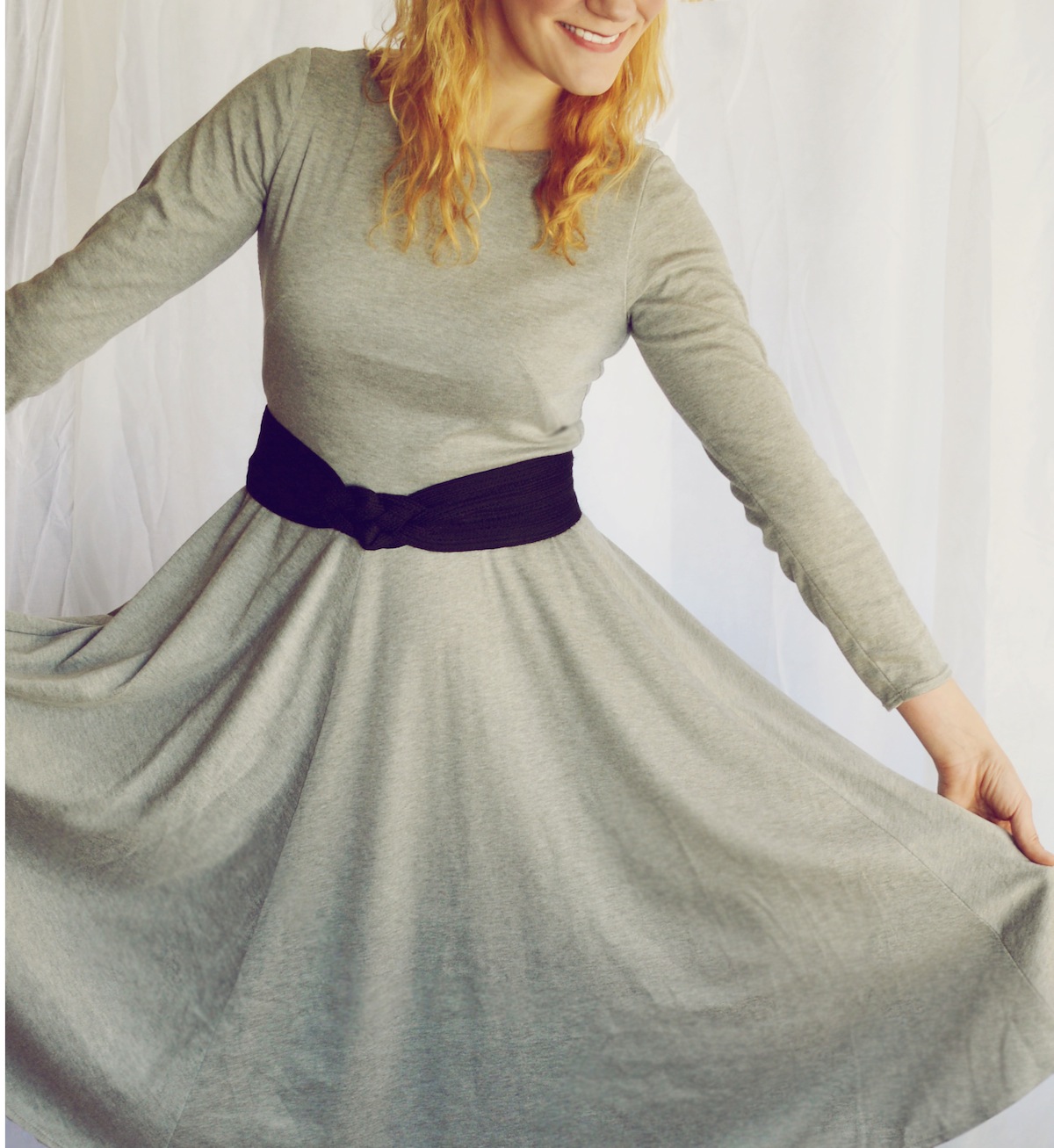
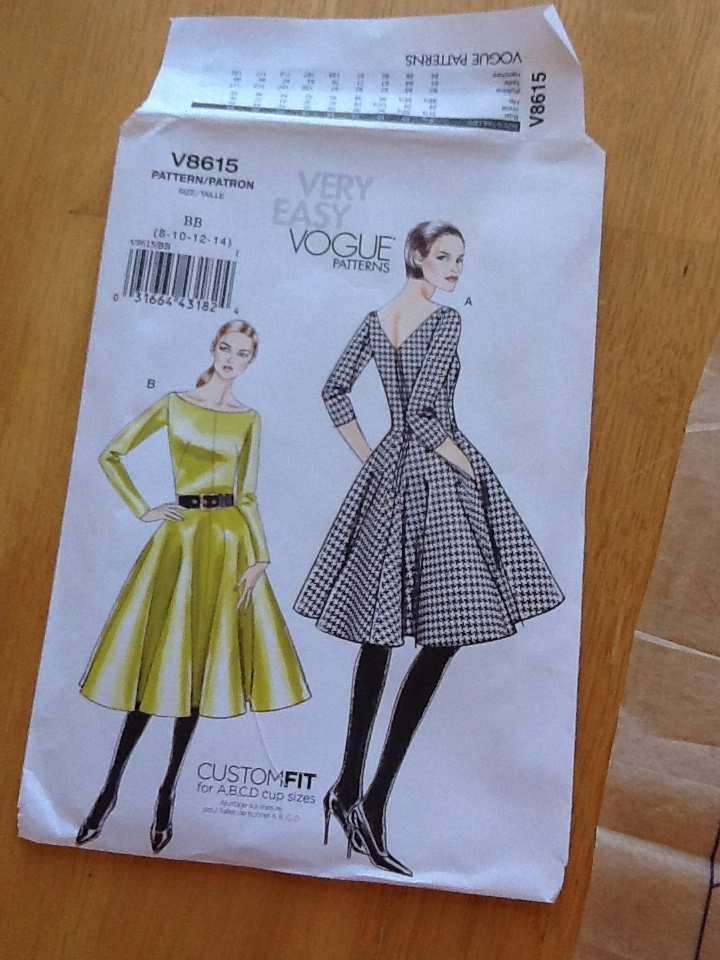
After seeing this post, I knew that once I felt I had a handle on garment sewing, I wanted to try to replicate this look: Vogue V8615 Very Easy in a jersey.

veasysquare

IMG_0736

I cannot emphasize enough googling the name of the pattern before proceeding to sew a garment.  Find all the blog posts you can and read up on the desired alterations.  After reading though a bunch of posts I knew I was going to…

  • Alter the neckline so it wasn’t such a dramatic boat-neck. (I didn’t want my bra straps peeking out).
  • Cut the front bodice piece on the fold of the fabric so it didn’t have a center-seam.
  • Not do a zipper (the jersey would allow me to stretch the dress over my head).
  • Lengthen the torso and the sleeves
  • Adjust the ease on the shoulders.
  • Adjust the sleeve pattern to avoid the elbow dart.
  • Use stay tape on the neckline, skirt hem, and sleeve hems.
  • Only line the bodice – not the sleeves or the skirt.
  • Not do pockets.

Read on for tips on pursuing each of these alterations and for a general walk-though on the pattern!

Continue reading

11 Comments

Filed under Clothes, Pattern, Techniques

I made a Tova!

I made a Tova!  tovasquare

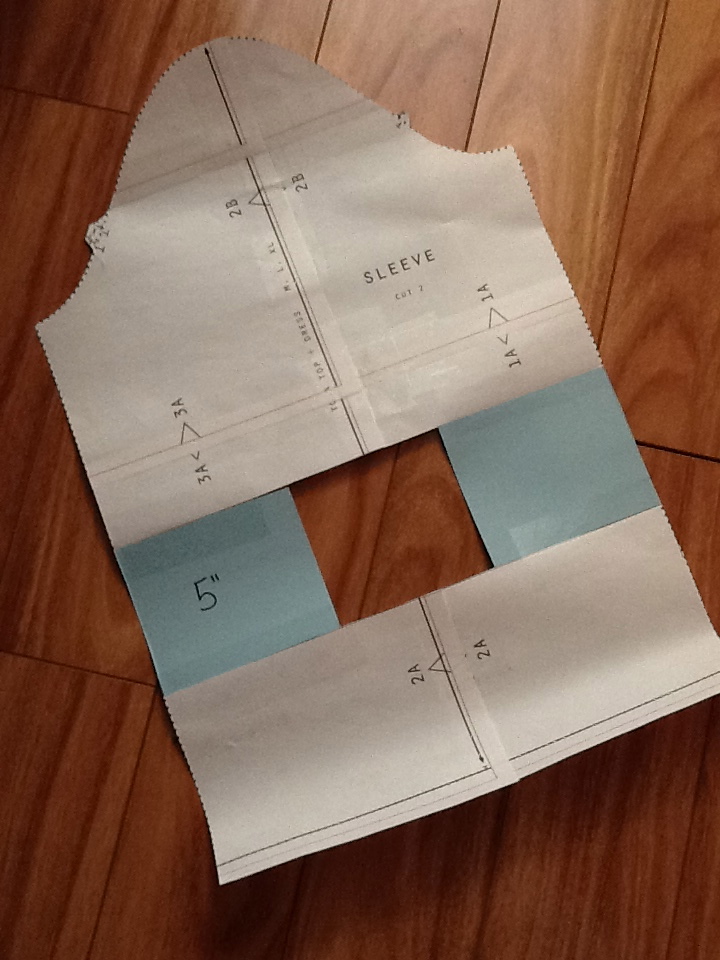
I would do a pattern walk-through, but really the only adjustment I made was adding a bit of length to the sleeves (5 inches to made them full-length for my monkey arms rather than 3/4 length) and to the torso (one inch longer than the largest size hem line).

IMG_0735

Sleeve pattern piece with my length adjustment.

The pattern isn’t necessarily tricky, but I found VeryKerryBerry’s Tova Sew-A-Long blog posts IMMENSELY helpful.   And like Kerry, I lined the bodice panel – baste stitch your lining fabric to your Tova fabric wrong sides together first thing, and then proceed as normal!   I did this because I’ve seen that the Tova collar kind of flops open adorably, and I found the idea of having some “peekaboo” fabric inside appealing for everyone who chooses to stare down my shirt.

tova3

Read the note at the bottom about why I have my iPad in my lap here…

My shirt is made from Mixed Signals Voile in Striking, which I got from Pink Castle Fabrics.

I did my best to line up my pattern pieces smartly so that the vertical lines of this fabric aligned nicely in the finished product.  I was pretty successful!

tova2

This was my first time sewing with Voile, and it was wonderful!  I used my walking foot while sewing and didn’t experience any trouble.

Okay – a little note about why I have my iPad in my lap in that picture… My husband got me the coolest little gadget for my birthday!  It’s a Nikon WU-1a Wireless Mobile Adapter (they don’t sponsor, obvs – I’m small ‘taters).  I plug the little square into the side of my camera, and it creates a wifi network that I can join on my iPad.  Then I can open the app on my iPad and see through my camera THROUGH MAGIC through my iPad!!!  And then I can take the picture by clicking the button on my iPad!!!  So cool.   UPDATED TO ADD:  Also, the dealy automatically sends the pictures on my camera onto my iPad/PhotoStream – no more chords for getting the photos onto a computer! Here’s a youtube review.

9 Comments

Filed under Clothes, Fabric, Pattern

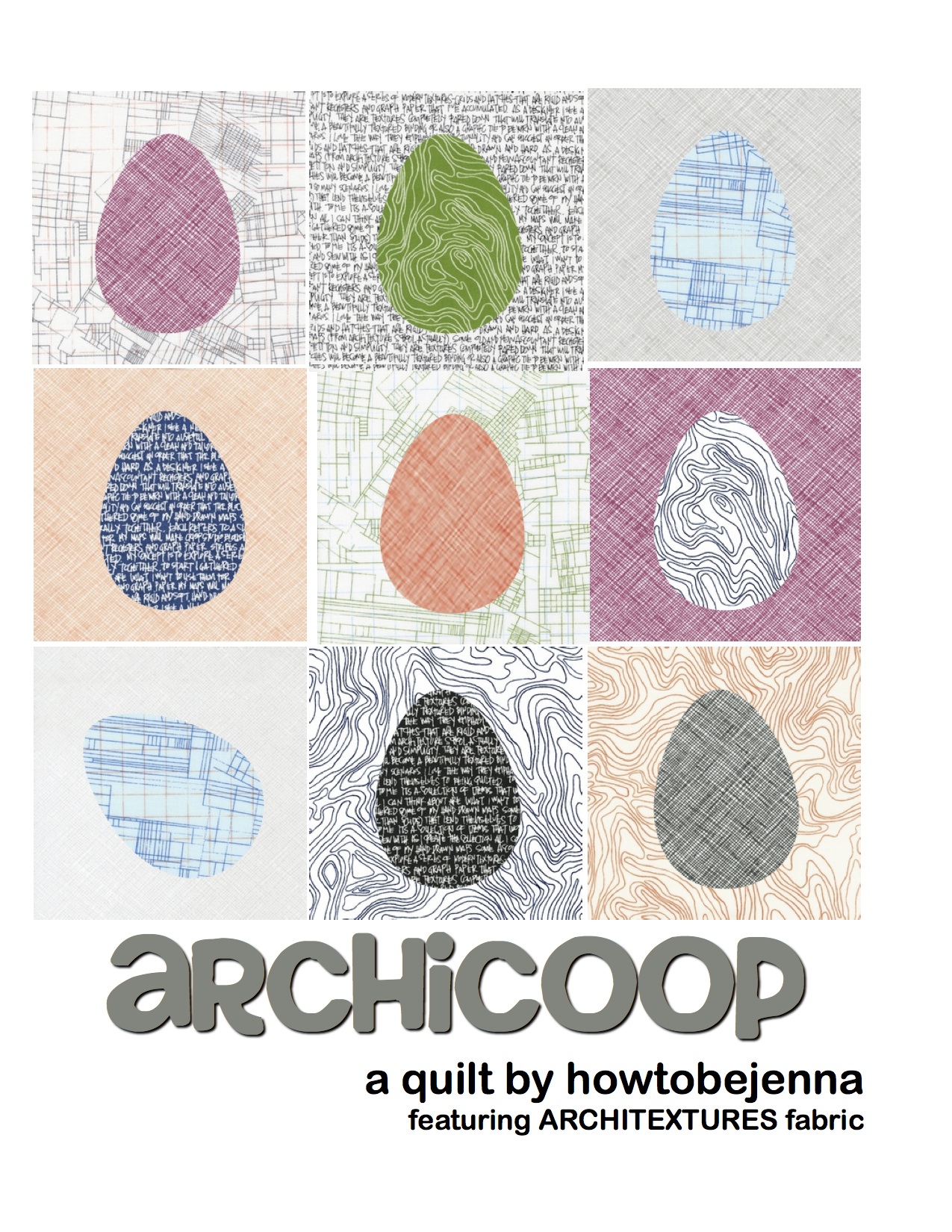
Archicoop! Finished Quilt

archicoopI finished my quilt!

coopfront1

coopfront2

I quilted diagonal lines about 2.5″ apart to convey chicken-wire for my little coop.  The quilt-front is exclusively made out all the fabrics from Architextures by Carolyn Friedlander.

For more information about the piecing of the quilt top – check out this previous post.

coopback

The backing fabric features the cross-hatched black and white print from Summersville by Lucie Summers for Moda.   The quilt is bounded in a solid royal-blue fabric, hand-stitched.

Each block finishes to 7.5″ square.  The quilt is about 53″ x 60″ – big enough to wrap around my shoulders.

And that’s just what I’m going to do with this quilt!  Wrap up in it every day.  I work from home early early early in the morning, but cuddling with this quilt in my office will make it all not seem so bad.

nametag

Fun little label.

2 Comments

Filed under Fabric, Quilting

Modern Art Lessons – Expressionism

In today’s Lessons in Modern Art for the Modern Quilter, it’s time to Express Yourself!  That’s right, we’re at the period of emotional, introspective art that emerged from 1905 throughout the early 1930s that we know as Expressionism.

artbutton2

The Expressionists continued the style of symbolic color usage popularized by the Fauvists.  However, these new painters turned to inspiration within their own emotions rather than their literal surroundings.  Increased urbanization, as well as the frightening, alienating experience of war created a sense of heightened emotions that started to take prominence in the work of these artists. The subject matter of these pieces became more abstract and sometimes completely isolated from the task of describing physical objects.  This was truly the birth of the abstract art movement.

5869

Paul Klee – Affected place (1922)

Paul Klee - “Highways and Byways” (1929)

Paul Klee – “Highways and Byways” (1929)

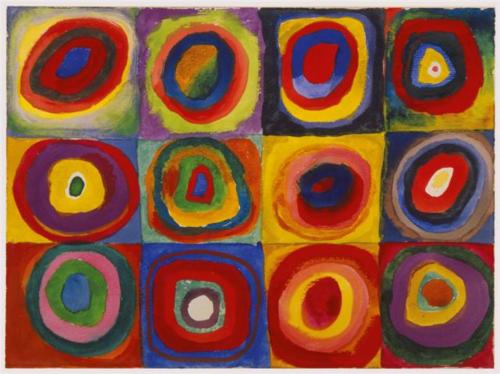
Expressionist art can be evaluated based on how successfully the artists conveyed his or her emotions, rather than the quality of the representation of a landscape, person, or object.  Many of the most prominent Expressionist painters were also musicians.  Here, you can see how Kandinsky’s bright, joyous colors almost vibrate with musical tones:

Color Study: Squares with Concentric Circles- Wassily Kandinsky- 1913

Color Study: Squares with Concentric Circles- Wassily Kandinsky- 1913

See the works of : Wassily Kandinsky, Paul Klee

There are many wonderful Modern quilts that reflect the work of these Expressionists.  All of the bright string quilts featured in THIS FLICKR GROUP are reminiscent of the color studies of Kandinsky. 

But in terms of a quilt simply evoking an emotion, I wanted to share this T is for Tipsy Quilt by Dorie of Tumbling Blocks:

T is for Tipsy quilt by Dorie Schwarz

T is for Tipsy quilt by Dorie Schwarz

Although all of the blocks share the same basic pattern and the color-scheme is relatively monochromatic, the brilliant composition absolutely illustrates the desired “tipsy” emotion.  This quilt is playful, liberating, merry-making, and go home T blocks cause you’ve definitely got the spins!

Key Sources: theartstory.org, artfactory.com,

3 Comments

Filed under Inspiration